


Hey there, it’s hard to tell we’re in the good times until we’ve left them.
Obviously, I’m talking about today’s chapter in “Bay Area Abroad: Innovation through Fragmentation”. Over the last two decades, China managed to rise into the world’s second most powerful economy and now fragments technology flows. Today’s post traces when the new Bay Area technology failed to integrate into China.
Telling this story can cut a million different ways. What lessons arise from this reading?
Table of Contents: Introduction | How the Bay Area Makes New Tech | The Cold War | Japan | Globalization of the 1990s | China into Today | Today’s Fragmenting Flashpoints | Assessing The Engine & The Exposure | Conclusion
If the United States and China end up at war, history will highlight a speech from President Clinton that’s forgotten today.1 On March 9, 2000, President Clinton may have delivered a case of fleeting optimism.
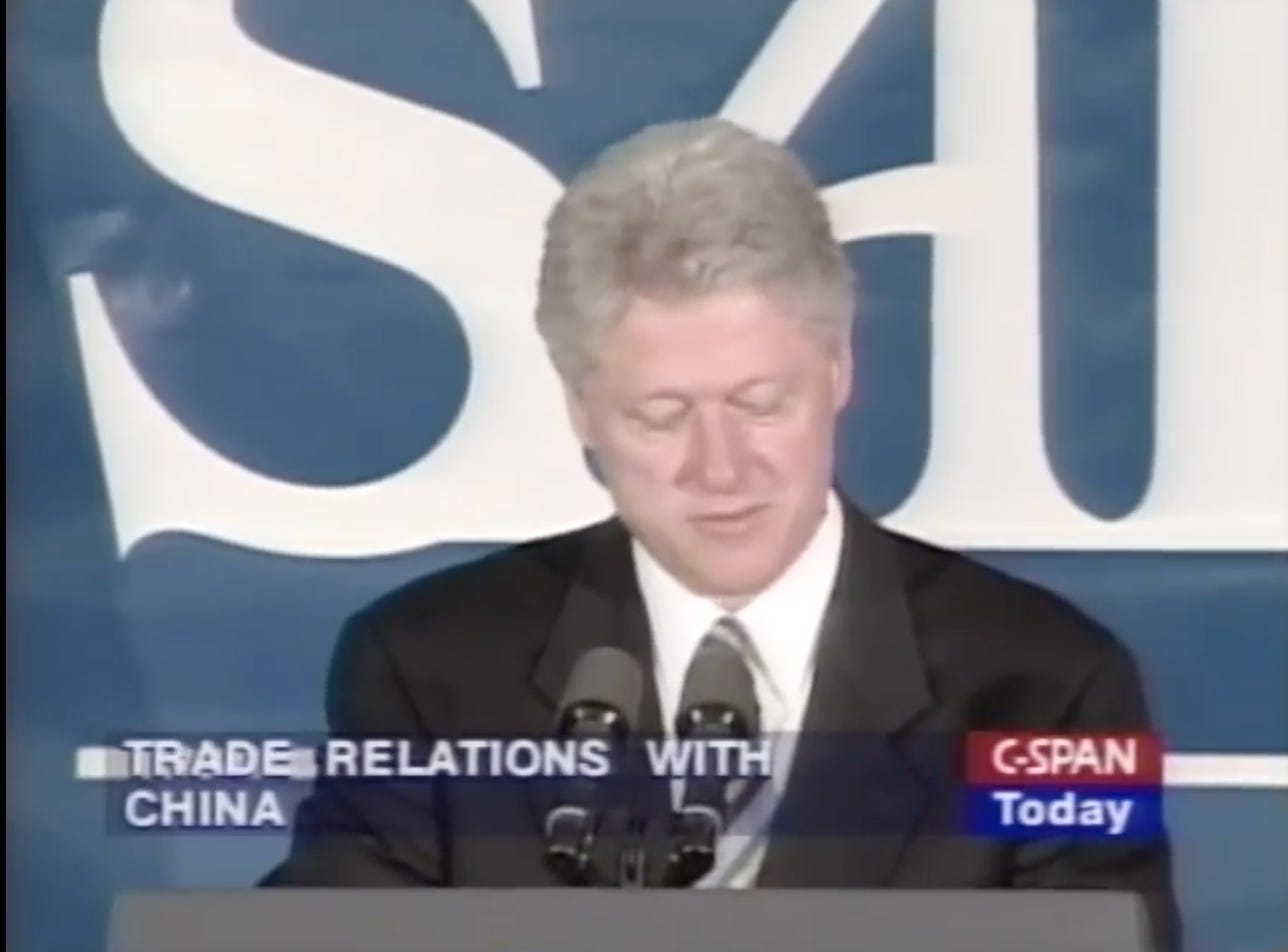
We know how much the Internet has changed America, and we are already an open society. Imagine how much it could change China. Now, there’s no question China has been trying to crack down on the Internet — good luck. That’s sort of like trying to nail Jello to the wall. — President Clinton, March 8, 20002
Clinton’s words were emblematic of a wider belief at the time. The trade of technology could liberalize China’s economy and politics. That failed.
A Wave of Liberal Innovations
Over the past two decades, Bay Area innovations arrived in the world that extended liberal values.3 Personal computers, smartphones, and social media leveraged the open internet to empower users. To web a new digital world with the real economy, computing power revolutionized: cloud hosting lowered the cost of running tasks online at scale; transistor design went nanoscopic, making mobile devices that matched the power of old supercomputers; and machine learning algorithms began guiding decisions in real time.
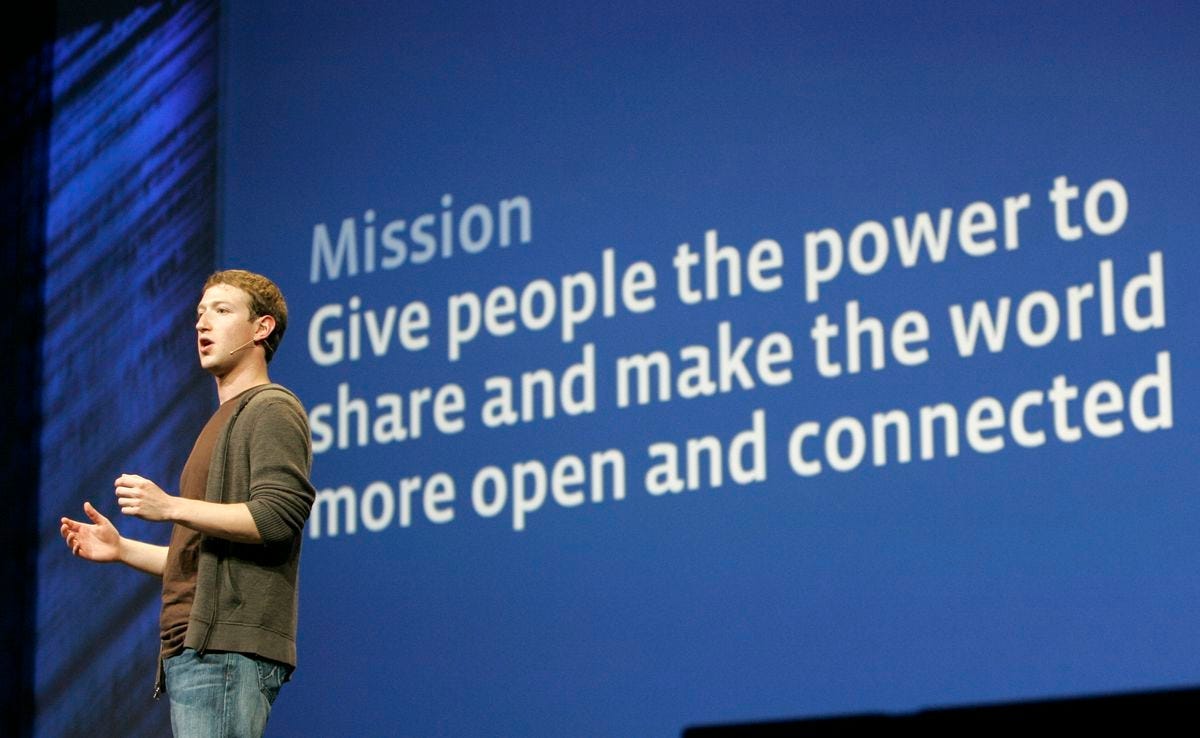
A sense of common optimism united these Bay Area technologists with policymakers in Washington. Innovators in California believed they were creating a future “digital utopia,” where the benefits of new innovations would decentralize power away from these institutions built for the Cold War.45 Globalists in Washington worked to ease American companies’ access to foreign economies through bodies like the World Trade Organization (WTO), whose trade rounds increased imports and exports through mutually lowering trade restrictions.
A Shared Optimism for China
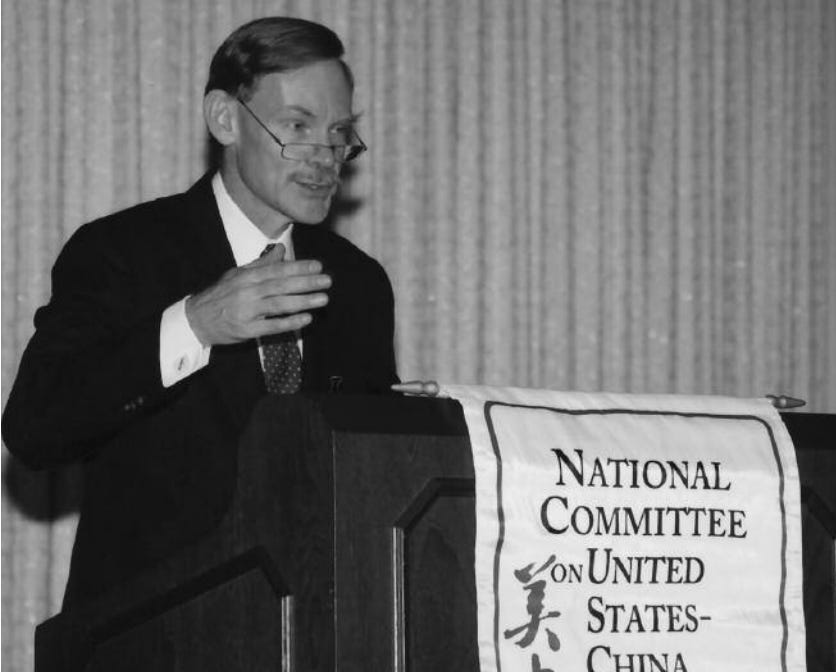
That shared sense of optimism extended into reforming China. Policymakers hoped trade would bring economic and political changes to the rising power. Since 1978 reforms, China’s economy grew by more than 9% a year on average, lifting almost 800 million people out of extreme poverty.6 Decades of protectionist policies and subsidies aided its centrally planned growth. The CCP was long criticized for rejecting democratic norms. Washington wanted China to deepen its trade ties worldwide and become a so-called “responsible stakeholder” of the global world order.7
Bay Area technology companies saw a cheap labor base to grow their margins and over a billion users coming online. The ambition was clear: could a huge economy—with a tremendous potential base for manufacturing and users—integrate in the world’s technology stack and world order moreover… when its government did not uphold the same values of a system built by the democratic West?
That’s what the Clinton administration thought:
“When China joins the WTO, by 2005, it will eliminate tariffs on information technology products, making the tools of communication even cheaper, better, and more widely available.” — President Clinton, March 8, 20008
Bringing Technology Trade to China
When China agreed to join the WTO in 2001, it took on a commitment to lower the barriers of technology trade through a series of longstanding agreements known as the Information Technology Agreement (ITA).9
Beginning in 1996, the ITA lowered tariffs over computers, telecommunication equipment, semiconductors, including its manufacturing and testing equipment, software, scientific instruments, as well as most of the parts and accessories of these products.10 The ITA made it easier for Bay Area technology to be manufactured in China, then exported out of it. 11
China is commonly called “the workshop of the world”. It might more sharply be called “the foreign-owned workshop of the world”. China’s rise has benefited US [transnational corporations] by keeping their production costs lower while also being an increasingly important consumer market as China’s middle class has expanded. — Sean Kenji Starrs and Robert Hunter Wade, “No End in Sight for Global Capitalism,” May 202612
Bay Area firms lowered production costs by shifting supply chains along the Chinese coastline and into the mainland, reinforcing their ties across the Pacific as a key linkage in lowering the cost of physical exports.13
China Started as a Supplier, Not a Buyer
Over the 2000s, China presented a regional opportunity as a factory for Bay Area technology companies. The strategy was to capture more profit by retaining high-value work like design while outsourcing the lower-value work to China. Ties grew even as consumer demand for connectivity remained low.
Cisco Systems provides an example of this mutually beneficial relationship. Beginning in the 1990s and into the new millennium, the networking company out of San Jose built routers, switches, and software to ease information sharing.14
Cisco’s sales stayed low in the Asia Pacific region; they did not follow the shift in supply chains to China. In October 1998, Cisco announced that China Telecom selected it as the “strategic supplier of the countrywide backbones for ChinaNet and the China Multimedia Service Network.”15 The contract was small—$11 million, just 13% of ChinaNet’s revenue—because China’s entire user base was also small, at roughly 600,000 users.16
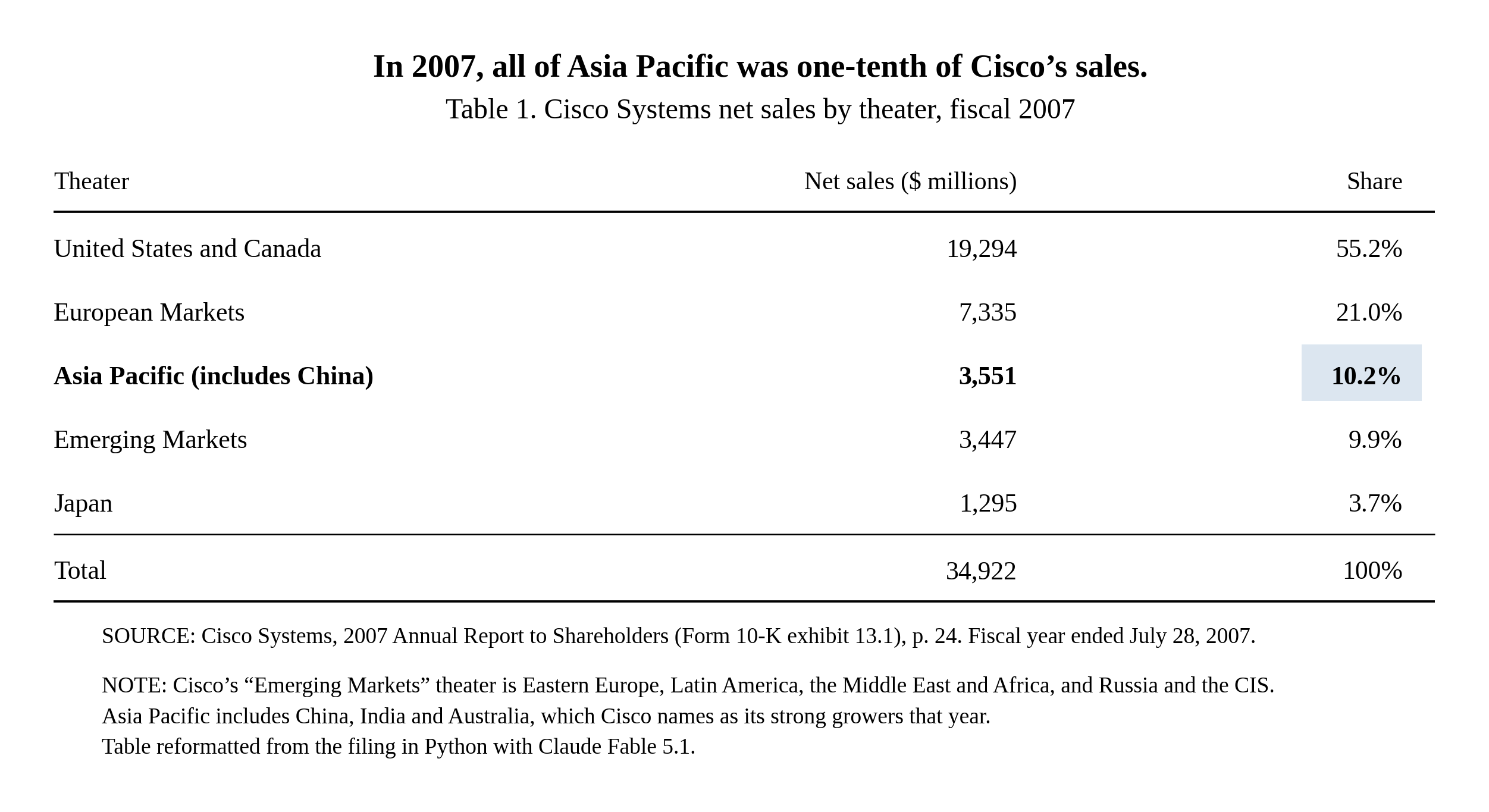
In the ensuing decade, the internet did not diffuse into the Asia Pacific like it would in advanced Western economies; for in 2007, the Asia Pacific region, including the major markets of China, India, Korea, and Australia, composed only 10.2% of Cisco’s net sales.17
Sales may have been small, but China played a significant role in Cisco connecting the rest of the world; the company would contract China-based manufacturers rather than owned factories for assembling and testing circuit boards and repairs.18
“In the past five years, Cisco has purchased more than USD $7 billion worth of China-sourced components and services, a critical part of the company's virtual manufacturing supply chain.” — Cisco Systems, November 1, 2007 19
Cisco is one example of a Bay Area technology company benefiting alongside Chinese manufacturing firms. More broadly, the ITA helped fuel this kind of bilateral growth. One study finds the ITA helped push world exports from $549 billion in 1996 to $1.65 trillion by 2015.20 By 2015, China had become the largest importer of ITA products, accounting for 22.5 percent of all global ITA imports.21 China absorbed components, equipment, and inputs that fed its growing role in the global electronics supply chain, rather than displacing Bay Area firms… for now.
China Plays by Different Rules
When foreign economies trade, the best practices of their companies naturally diffuse. The same occurred over technology flows between China and the Bay Area. By chasing cheaper margins, technology transfer inevitably happened.22 As Sean Starrs notes, China’s “world share of manufacturing” grew “from 8.6% in 2004 to 28.8% in 2023,” a shift that by the 2010s extended beyond “cheap manufactured goods” to “higher-value technologies such as electric vehicles, smartphones, social media and solar panels.”23
Over this period, China would grow into the United States’ largest trading partner, surpassing Japan in 2003, Mexico in 2006, and Canada in 2015.24 By 2013, China had overtaken Japan as the world’s second-largest IT sector—$179 billion in spending to Japan’s $173 billion—though it remained barely a third the size of the United States’ $686 billion.25
Was China playing by the rules? In 2006, the WTO Secretariat confirmed in a speech that “ITA tariff lines” were “zero rated.”26 But in practice, the picture looked different. Across multiple sectors, trade officials in the United States believed that much of China’s free-trade commitments were hollow, in large part because China continued its model of state-sponsored capitalism through subsidies rather than liberalizing its economy.27
In the case of integrated circuits, for example, a zero-rated tariff did not mean equal treatment between Chinese and foreign firms: China refunded domestic producers most of the 17% value-added tax on their sales, effectively subsidizing their own products. It took the first WTO complaint the United States ever levied against China, in March 2004, to end the practice.28
Holding the Line
And as physical infrastructure helped mature the open internet, a boom of software-based business models followed. Over the 2000s, “dot-com” companies were asset light, could scale quickly, and offered online ways to digitize information, solve problems, and conduct business, largely in e-commerce and digital services.29 From 1995 to 2002, optimistic investment fueled hundreds of internet-based companies.30
This “dot-com” boom built familiar Bay Area champions in social media and cloud computing. Venture capital flowed into ambitious product ideas, massive ad campaigns, ornate corporate offices, and handsome employee bonuses. And then, the bubble exploded.
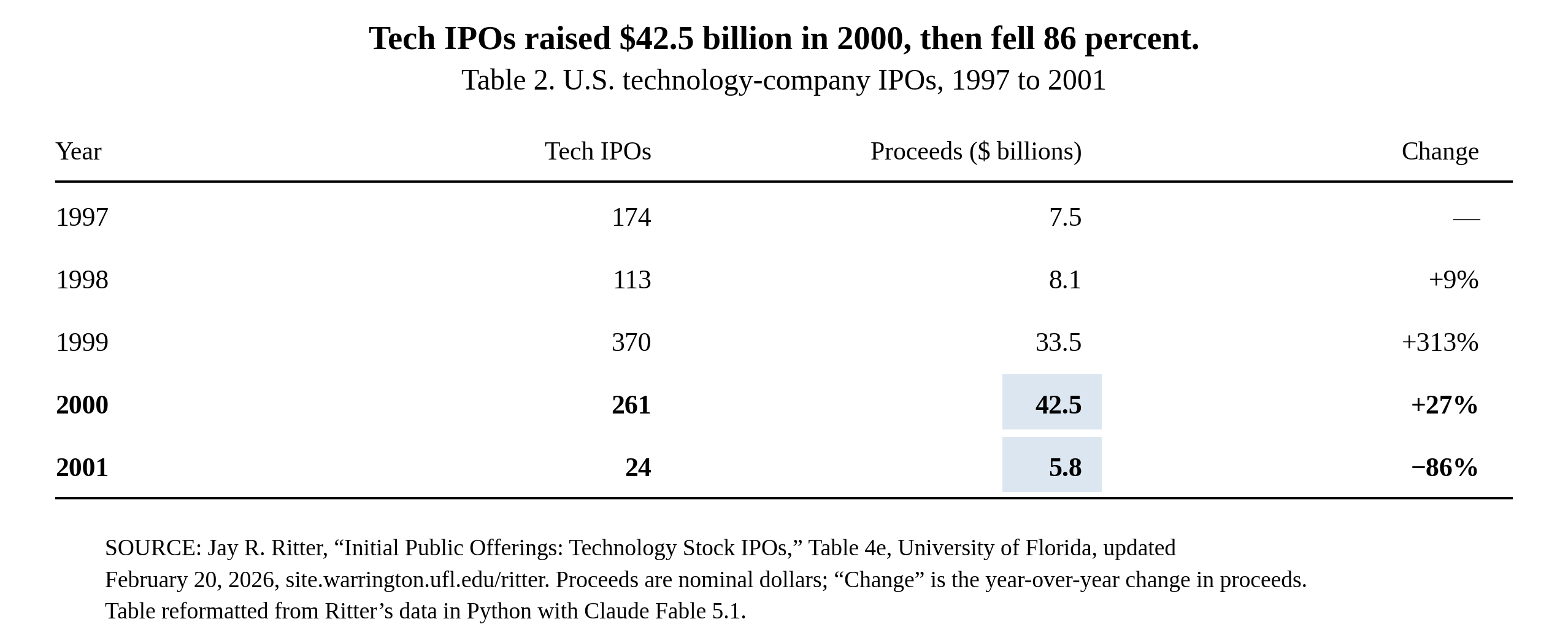
Some software startups that survived the dotcom bubble managed to scale into global enterprises. Facebook is one example: the social media platform began in a 2004 Cambridge dorm before quickly moving to Palo Alto. It scaled its user base worldwide, and today Meta’s entire family of apps—including Facebook, WhatsApp, and Instagram—connects more than three and a half billion daily active people.31 Google is another: the company began in 1995 at Stanford University with the mission “to organize the world’s information and make it universally accessible and useful.”32
Alphabet, its parent company today, operates through two main business segments, Services and Cloud, reaching users nearly everywhere on the globe by disseminating ads, developing the Android operating system, hosting YouTube videos, cloud computing and storage infrastructure, and more.33 Today, roughly 90% of all online searches are made on Google.34
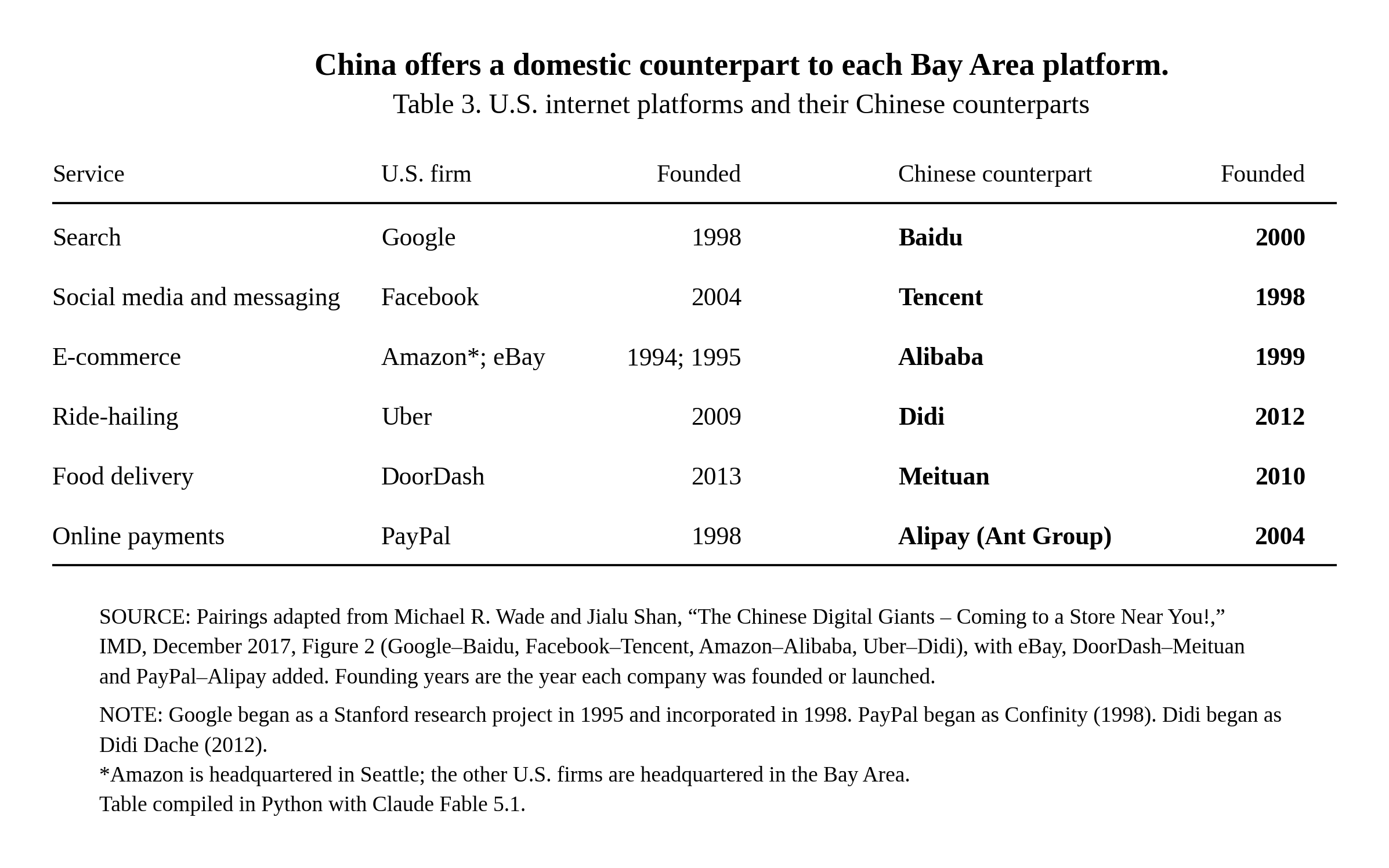
Meanwhile, China was scaling its IT sector at home to compete with Bay Area technology counterparts. The Chinese state built “the Great Firewall” to censor its digital ecosystem and clear the field of Bay Area firms:35 as Dan Wang observes in Breakneck, “the state drove out Google and Facebook to the benefit of local platforms like Baidu and Tencent.”36 Throughout the 2010s, China founded at-home alternatives to Bay Area companies: Alibaba for eBay and Amazon;3738 Didi for Uber;39 Meituan for food delivery;40 and Ant’s Alipay for PayPal.41
In networking equipment, the competition ran deeper still: Huawei, founded in 1987, spent decades growing from a domestic supplier into Cisco’s chief global rival, and by the 2010s had surpassed Bay Area and other Western firms in telecom infrastructure markets worldwide.42
Hopes Dashed
Like Japan, China embraced a techno-nationalist strategy by setting lofty development goals.43 To achieve this, the Chinese state picked state champions and offered competitive alternatives to American firms.44 But unlike Japan, China did so without liberalizing its economy or adopting democracy.
Today, many of China’s sectors surpass or directly compete with their American counterparts, dashing hopes of a unified liberal world order and digital utopia.45
This concludes Volume I that of historical chapters. Up next, Volume II begins: Today’s fragmented world.
Have a great weekend everyone,
Max
For example, Neville Chamberlain’s policy of appeasement leading up to World War II.
William J. Clinton, remarks on China, Paul H. Nitze School of Advanced International Studies, Washington, D.C., March 8, 2000, https://clintonwhitehouse6.archives.gov/2000/03/2000-03-08-remarks-of-the-president-on-china.html.
Whether Bay Area technology companies have extended democracy remains open for debate. This sentence takes their inventions and missions at their word.
Richard Barbrook and Andy Cameron, “The Californian Ideology,” Mute, September 1, 1995, https://www.metamute.org/editorial/articles/californian-ideology. The essay describes the belief, inherited from Marshall McLuhan, that “the power of big business and big government would be overthrown by the intrinsically empowering effects of new technology on individuals,” producing “an electronic direct democracy - the electronic agora - in which everyone would be able to express their opinions without fear of censorship.”
Ansgar Baums and Nicholas Butts, Tech Cold War: The Geopolitics of Technology (Lynne Rienner, 2025), 30. The authors attribute the notion of digital utopianism to Thomas Friedman’s The Lexus and the Olive Tree.
World Bank, “The World Bank in China: Overview,” https://www.worldbank.org/en/country/china/overview: “Since 1978, the beginning of China’s reform and opening up period, GDP growth has averaged over 9 percent a year,” “lifting almost 800 million people out of extreme poverty.”
Robert B. Zoellick, “Whither China? From Membership to Responsibility,” remarks to the National Committee on U.S.-China Relations, New York City, September 21, 2005, reprinted in Notes from the National Committee (Winter/Spring 2006): 6–9, https://www.ncuscr.org/wp-content/uploads/2020/04/migration_Zoellick_remarks_notes06_winter_spring.pdf.
Clinton, remarks on China, March 8, 2000.
China’s WTO accession in 2001 included a commitment to join the ITA, which it did in 2003; its ITA tariff lines were zero-rated by 2005. Michael Anderson and Jacob Mohs, “The Information Technology Agreement: An Assessment of World Trade in Information Technology Products,” Journal of International Commerce and Economics (U.S. International Trade Commission, 2010), 123 n. 21, https://www.usitc.gov/journals/05_AndersonMohs_ITAgreement.pdf: “China’s accession to the WTO in 2001 included a commitment to join the ITA, which occurred in 2003”; Baums and Butts, Tech Cold War, 34.
World Trade Organization, “Information Technology Agreement — An Explanation,” https://www.wto.org/english/tratop_e/inftec_e/itaintro_e.htm; WTO, 20 Years of the Information Technology Agreement (WTO, 2017), chap. 1.
Baums and Butts, Tech Cold War, 34; WTO, “Information Technology Agreement — An Explanation.”
Sean Kenji Starrs and Robert Hunter Wade, “No End in Sight for Global Capitalism: The Sinews of US Structural Power in the 21st Century,” The Japanese Political Economy (May 22, 2026), 4, https://doi.org/10.1080/2329194X.2026.2675224.
Baums and Butts, Tech Cold War, 34; WTO, “Information Technology Agreement — An Explanation.”
Cisco Systems, Form 10-K for the fiscal year ended July 25, 1998, https://www.sec.gov/Archives/edgar/data/858877/0000891618-98-004310.txt: Cisco “creates hardware and software solutions that link computer networks so that people have easy access to information without regard to differences in time, place or type of computer system.”
Baums and Butts, Tech Cold War, chap. “Prelude to the Tech Cold War”; corroborated by Cisco Systems, “Cisco Systems to be Key Supplier for Building China’s Nation-Wide IP Backbone,” press release, Beijing, October 14, 1998, https://newsroom.cisco.com/c/r/newsroom/en/us/a/y1998/m10/cisco-systems-to-be-key-supplier-for-building-china-s-nation-wide-ip-backbone.html.
Cisco, “Key Supplier,” October 14, 1998: the deal was “worth over US$11 million” and ChinaNet “currently supports more than 50 percent of China’s Internet customers - roughly 600,000 users.”
Cisco Systems, 2007 Annual Report to Shareholders (Form 10-K, exhibit 13.1), 24, https://www.sec.gov/Archives/edgar/data/858877/000119312507202552/dex131.htm. Asia Pacific net sales were $3,551 million, 10.2 percent of $34,922 million.
Cisco Systems, Form 10-K for the fiscal year ended July 28, 2007, “Manufacturing,” https://www.sec.gov/Archives/edgar/data/858877/000119312507202552/d10k.htm: “We primarily employ an outsourced manufacturing strategy that relies on contract manufacturers … to provide services related to printed circuit board assembly, in-circuit test, and product repair as well as product assembly.”
Cisco Systems, “Cisco Announces Multi-Year Innovation and Sustainability Initiative in China,” press release, Beijing, November 1, 2007, https://newsroom.cisco.com/c/r/newsroom/en/us/a/y2007/m11/cisco-announces-multi-year-innovation-and-sustainability-initiative-in-china.html.
WTO, 20 Years of the Information Technology Agreement (WTO, 2017), 25, https://www.wto.org/english/res_e/booksp_e/ita20years_2017_chap2_e.pdf: “Between 1996 and 2015, world exports of ITA products increased from US$ 549 billion in 1996 to US$ 1,653 billion in 2015.”
WTO, 20 Years of the ITA, 28: “in 2015 China was the largest importer of ITA products (22.5 per cent share of global imports of ITA products).”
Oberon Dixon-Luinenburg, “The New Space Race with China,” Palladium, March 28, 2025, https://www.palladiummag.com/2025/03/28/the-new-space-race-with-china/: “Past Chinese successes in catching up to foreign producers often involved Western companies offshoring to mainland China, chasing the better margins of cheap labor—something that inevitably resulted in technological transfer.”
Sean Kenji Starrs, “Can China Challenge the US Empire?,” Transnational Institute, February 4, 2025, https://www.tni.org/en/article/can-china-challenge-the-us-empire.
U.S. Census Bureau, “Top Trading Partners – December 2006,” https://www.census.gov/foreign-trade/statistics/highlights/top/top0612.html (total trade: Canada $534.0 billion, China $343.0 billion, Mexico $332.4 billion); “Top Trading Partners – December 2015,” https://www.census.gov/foreign-trade/statistics/highlights/top/top1512yr.html (China $598.1 billion, Canada $575.5 billion); U.S. Census Bureau, “Trade in Goods with China,” https://www.census.gov/foreign-trade/balance/c5700.html, and “Trade in Goods with Japan,” https://www.census.gov/foreign-trade/balance/c5880.html (2003 exports plus imports: China $180.8 billion, Japan $170.0 billion; in 2002 Japan was still ahead, $172.9 billion to $147.3 billion).
International Data Corporation (IDC) figures, reported in Patrick Thibodeau, “China Passes Japan to Become World’s 2nd Largest IT Market,” Computerworld, December 4, 2013, https://www.computerworld.com/article/1506017/china-passes-japan-to-become-world-s-2nd-largest-it-market.html. China’s 2013 IT spending of $179 billion narrowly exceeded Japan’s $173 billion, placing it second worldwide behind the United States (~$686 billion). The milestone is independently corroborated by European Information Technology Observatory (EITO) data released by BITKOM ahead of CeBIT—China at 9.5 percent of global IT spending versus Japan’s 8.3 percent—reported in “China Overtakes Japan on IT Spending,” Agence France-Presse, February 27, 2013, https://www.rappler.com/business/22733-china-overtakes-japan-on-it-spending/.
Baums and Butts, Tech Cold War, 34.
Office of the U.S. Trade Representative, 2018 Report to Congress on China’s WTO Compliance (February 2019), 5, https://ustr.gov/sites/default/files/2018-USTR-Report-to-Congress-on-China's-WTO-Compliance.pdf: “China became a WTO Member but did not internalize the open-market norms of the WTO community. China retains its non-market economic structure and its state-led, mercantilist approach to trade, to the detriment of its trading partners”; and p. 2: “China’s use of export and import substitution subsidies has been ubiquitous throughout the past two decades in sectors as diverse as automobiles, textiles, advanced materials, medical products and agriculture, despite explicit prohibitions in the WTO Agreement.” For the contemporaneous view, U.S. Government Accountability Office, U.S.-China Trade: USTR’s China Compliance Reports and Plans Could Be Improved, GAO-08-405 (April 14, 2008), https://www.govinfo.gov/content/pkg/GAOREPORTS-GAO-08-405/html/GAOREPORTS-GAO-08-405.htm: “Beginning in 2006 and continuing throughout 2007, China’s progress toward further market liberalization began to slow.”
WTO, “DS309: China — Value-Added Tax on Integrated Circuits,” https://www.wto.org/english/tratop_e/dispu_e/cases_e/ds309_e.htm: “On 18 March 2004, the United States requested consultations with China concerning China’s preferential value-added tax (“VAT”) for domestically-produced or designed integrated circuits.” Office of the U.S. Trade Representative, “U.S. and China Resolve WTO Dispute Regarding China’s Tax on Semiconductors,” July 8, 2004: “Today’s agreement resolves the first WTO case filed against China by any WTO Member.”
Harald Puhr, Jakob Müllner, and Claudia Trentini, “An Innovative Measure for Digital Firms’ Internationalization,” Transnational Corporations 30, no. 3 (2023): 130, https://unctad.org/publication/transnational-corporations-journal: “Not needing a physical presence in foreign markets to reach consumers, these companies have a very light foreign-asset presence. Digital companies are a very dynamic group that, on the basis of firm-specific advantages in intangible and digital assets, as well as network effects, are able to reach scale in a short time and expand abroad seamlessly. These new asset-light business models are disrupting modes of operation and cross-border processes.”
Cait Caffrey, “Dot-com Bubble,” EBSCO Research Starters, https://www.ebsco.com/research-starters/economics/dot-com-bubble.
Meta Platforms, “Meta Reports Second Quarter 2026 Results,” July 29, 2026, https://investor.atmeta.com/investor-news/press-release-details/2026/Meta-Reports-Second-Quarter-2026-Results/default.aspx: “DAP was 3.60 billion on average for June 2026.”
Google, “Our Story,” https://about.google/company-info/our-story/: “The Google story begins in 1995 at Stanford University.” Google Inc. was incorporated in August 1998.
Alphabet Inc., Form 10-K for the fiscal year ended December 31, 2024, 3: “Alphabet is a collection of businesses — the largest of which is Google. We report Google in two segments, Google Services and Google Cloud, and all non-Google businesses collectively as Other Bets.”
Purdue Global Law School, “U.S. v. Google: A Landmark Case and Warning Shot to Big Tech,” September 3, 2025, https://www.purduegloballawschool.edu/blog/news/google-landmark-case, summarizing Judge Amit Mehta’s August 5, 2024 opinion: Google “held almost 90% of the market share for searches conducted on computers and nearly 95% of the share for smartphone searches.” See also Puhr, Müllner, and Trentini, “An Innovative Measure for Digital Firms’ Internationalization,” 139: “The global dominance of Google as an everyday search engine with a market share of 93.11 per cent allows researchers to reach almost 7 billion people and gather valuable data on their socioeconomic behaviour.”
On the Firewall’s construction and censorship of the digital ecosystem: Bethany Allen-Ebrahimian, “The Man Who Nailed Jello to the Wall,” Foreign Policy, June 29, 2016 (“Censorship began in the 1990s with the introduction of early forms of the internet, and picked up slowly in the 2000s, as China began to block foreign social media sites… what came to be known as the Great Firewall”); and Elizabeth C. Economy, “The Great Firewall of China: Xi Jinping’s Internet Shutdown,” The Guardian, June 29, 2018, quoting Xi Jinping at the 2015 World Internet Conference (“We should respect the right of individual countries to independently choose their own path of cyber-development”). On clearing the field of Bay Area firms: foreign platforms were blocked outright—see “China Blocks Access to Twitter, Facebook After Riots,” TechCrunch, July 7, 2009 (Twitter and Facebook blocked after the Ürümqi riots; YouTube blocked since March 2009)—and Google exited the Chinese search market the following year; see David Drummond, “A New Approach to China,” Official Google Blog, January 12, 2010 (“We have decided we are no longer willing to continue censoring our results on Google.cn”). On the legal barriers that raised the cost of operating for foreign firms: Cybersecurity Law of the People’s Republic of China (2017), Article 37 (as translated: “Critical information infrastructure operators that gather or produce personal information or important data during operations within the mainland territory of the People’s Republic of China, shall store it within mainland China”); see also “A Primer on China’s New Cybersecurity Law,” Proskauer on Privacy, May 2017.
Dan Wang, Breakneck: China’s Quest to Engineer the Future (W. W. Norton, 2025), 179.
Wang, Breakneck, 69, 179.
“How Did Alibaba Capture 80% of Chinese E-Commerce?,” Forbes, May 8, 2014, https://www.forbes.com/sites/quora/2014/05/08/how-did-alibaba-capture-80-of-chinese-e-commerce/ (a contributor column). Corroboration: Alibaba Group Holding Ltd., Form 20-F, fiscal year ended March 31, 2015: Taobao GMV rose to RMB1,597 billion (US$258 billion) and Tmall GMV to RMB847 billion (US$136 billion) in FY2015.
“Taxi App Rival Didi Chuxing to Buy Uber’s China Business in $35 Billion Deal,” CNBC, August 1, 2016, https://www.cnbc.com/2016/08/01/chinas-didi-chuxing-to-acquire-ubers-chinese-operations-wsj.html.
Formed by the 2015 Meituan–Dianping merger; see “China’s Meituan Dianping Confirms $4.4 Billion Hong Kong IPO,” CNBC, September 7, 2018, https://www.cnbc.com/2018/09/07/chinas-meituan-dianping-confirms-4point4-billion-hong-kong-ipo.html. By the first half of 2018 Meituan held roughly 59 percent of China’s food-delivery market, up from 31.7 percent in 2015 (Trustdata).
“The China Mobile Payments: Alipay and WeChat Pay’s Market Share of 2017,” Ecommerce Strategy China, 2018 (citing Analysys Think Tank, Q1 2017).
Eva Dou, House of Huawei: The Secret History of China’s Most Powerful Company (Portfolio, 2025).
State Council of the People’s Republic of China, “Notice of the State Council on the Publication of ‘Made in China 2025’,” Guofa [2015] No. 28, May 8, 2015, trans. Center for Security and Emerging Technology, https://cset.georgetown.edu/wp-content/uploads/t0432_made_in_china_2025_EN.pdf.
AnnaLee Saxenian, The New Argonauts: Regional Advantage in a Global Economy (Harvard University Press, 2006).
For one comparative study of the commercial activity between US and Chinese sectors, see Stephen G. Brooks and Ben A. Vagle, Command of Commerce: America’s Enduring Economic Power Advantage over China (Oxford University Press, 2025), chap. 2.
Super interesting piece. But it did provoke a thought for me...the way I read it was that there were some undercurrents of a pro-US-capitalist style of innovation and buisness (which I don't disagree with), but I do wonder if it is always true. Basically I felt there was an implicit asymmetry in what counts as techno-nationalism.
When China blocks Google and Facebook, subsidizes domestic champions, or closes parts of its market to foreign technology, we correctly read that as evidence that China never accepted the liberal, open-market technological order. But I’m curious whether the U.S. response when Chinese technology actually becomes competitive deserves more scrutiny here too.
Huawei is on the FCC’s national-security Covered List. Congress created a divest-or-prohibition regime specifically encompassing TikTok/ByteDance. We put a 100% tariff on Chinese EVs. And Commerce’s semiconductor controls are explicitly designed to restrict China’s ability to develop advanced computing capacity.
That becomes particularly interesting because China isn’t always the technological follower anymore. You acknowledge that yourself with Huawei surpassing Western competitors in telecom infrastructure. China now produces roughly three-quarters of the world’s EVs and more than 80% of its battery cells.
None of that makes the U.S. and China politically equivalent—the differences in censorship, legal process, political rights, and the scope of state control are obviously enormous. But I think it complicates the liberal-America / techno-nationalist-China framing.
If the defining virtue of the American technology order is openness, what happens when openness produces a competitor that wins? At what point does defending a liberal technological order require increasingly protectionist or illiberal tools?