


Dear curious readers,
Today’s post launches a series into my professional studies that I’m so proud to begin sharing with you. If you’d prefer to jump in and skip the personal preface, scroll past the italics and begin the starting chapter that introduces many more to follow.
Over the coming weeks, I’ll be publishing here to help me cross the finish line of a larger forthcoming report: “The Bay Area Abroad: Innovation through Fragmentation”. This series will observe how the Bay Area’s innovative economy has consistently maintained global relevance since the start of the Cold War.
The more I spoke with insiders—executives, investors, reporters, academics, and technologists—that all see deeply into these companies, the more I learned that the fast headlines invoke hysteria; the speed of daily news forgoes the patience required to let the dust settle and truly evaluate impact: how do these innovations let us live out higher truths? How do these technology companies, likely more powerful than ever, shape our life? There are small, subtle effects with how notifications feed you and me our news—all the way up to Iran bombing the data centers that defend armies. Finishing this report leaves me humbled with more questions than answers.
Brief notes of gratitude. Nothing to follow would be possible without crucial editorial help: Lucy Montgomery’s keen eye, far sharper than mine, culled countless drafts into something hopefully legible; Sean Randolph set the record straight every day thanks to his deep experience living through waves of innovation as a Bay Area diplomat; and I’d like to thank the ears of Ben Vagle—they nearly fell off as he proved an invaluable sounding board to talk through much of the history to follow. A longer, and more professional, acknowledgments section will be written in the final draft.
If you do see whack errors, terrible phrasing, or typos, please tell me. Publishing online here comes with the added advantage to edit after. For better or worse, I am human and no artificial intelligence wrote any words to follow.
Table of Contents: Introduction | How the Bay Area Makes New Tech | The Cold War | Japan | Globalization of the 1990s | China into Today | Today’s Fragmenting Flashpoints | Assessing The Engine & The Exposure | Conclusion

The Bay Area Abroad
Technology companies founded in the Bay Area innovate technology that reaches around the world. Today, Meta hosts a gargantuan digital town square. Over three and a half billion daily active people use its family of apps: messaging on WhatsApp, sharing life updates on Facebook, and posting photos on Instagram.12 One layer deeper, the constant connection rests on a personal computing revolution that first started in Silicon Valley garages; over 2.5 billion Apple devices are now in active use around the world.3 And descending further into critical digital infrastructure, the networking and cloud innovations hosted by Alphabet, Cisco, and Equinix—to name a few—all weave the world together by sending information at the speed of light.4
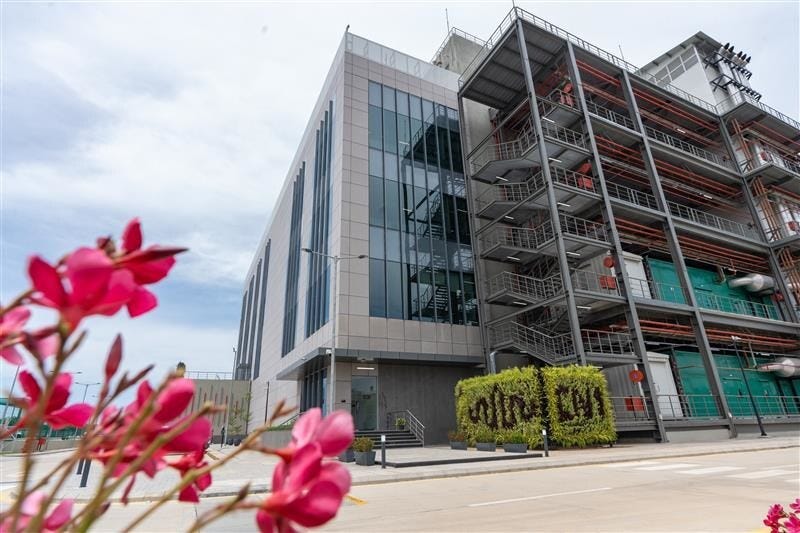
So deeply embedded in daily life, Bay Area technology companies cannot escape playing various roles in world affairs. During elections, should a social media company police content or do nothing? Where good governance is not a given, what narratives arise online that could turn civil unrest into civil war?567 In the Ukraine war, cloud providers provide the spine for cyberdefense, but then that leaves their employees the target of Russian hackers.8 The supply chains controlled by hardware players uphold trade between the United States and China; as the computing power for AI now serves as the latest measuring stick for great power rivalry, Bay Area chipmakers are seen as chokepoints for policymakers in Washington to control and preserve the lead.910
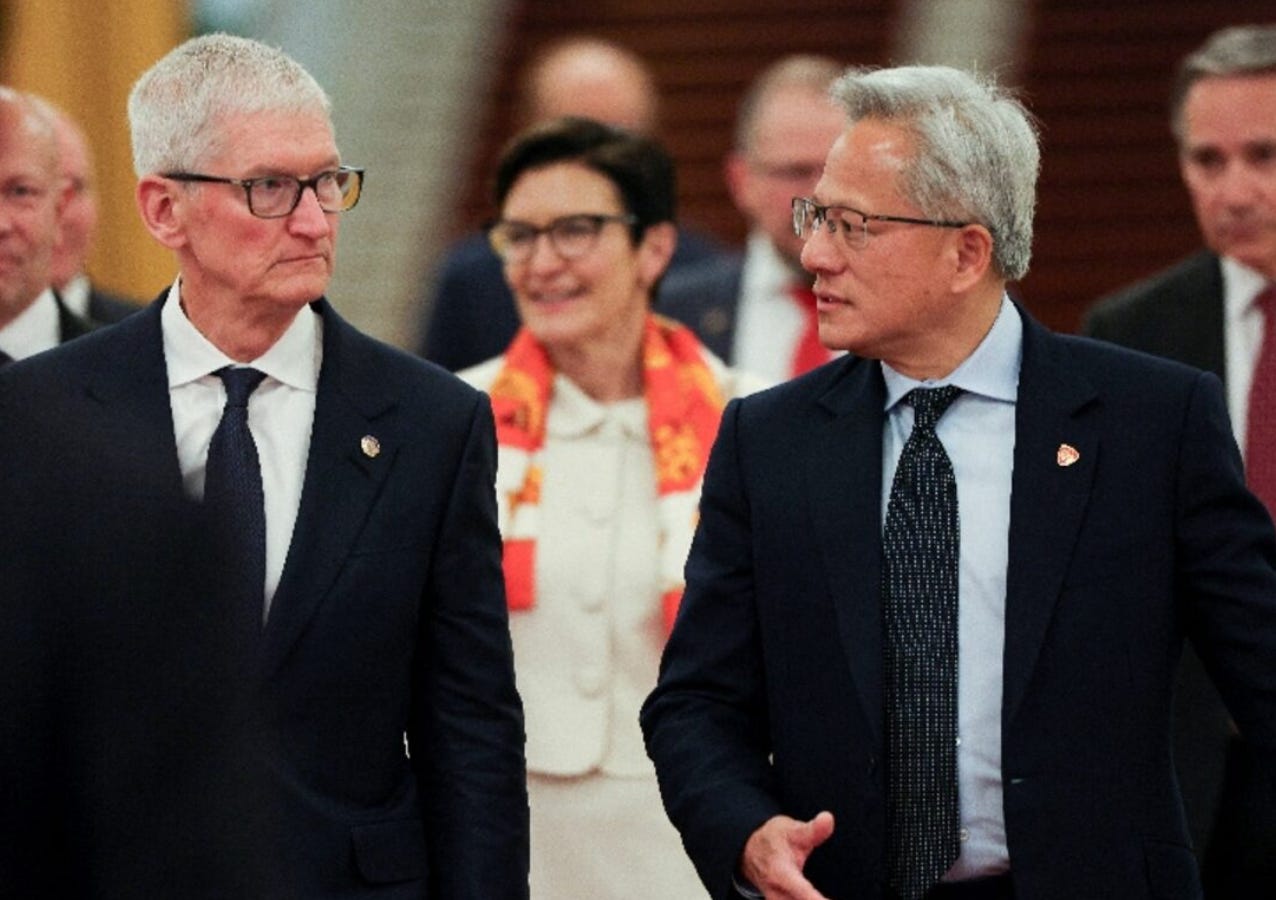
Ingrained in daily life and thrust into geopolitics, Bay Area technology companies need to navigate their ties to those governments, their economies, and populations. Other reports by the Bay Area Council Economic Institute examine overseas trade, but those focus on direct commercial ties to one economy, including Hong Kong11, Ireland12, India13; this report compares multiple economies over time to uncover insights into how Bay Area companies wield technology to play various roles in geopolitical competition.
Innovation through Fragmentation
To tell this story, this report aligns the major waves of new technology with geopolitical periods.
Innovation: The Supply and Demand for New Technology
Supplying new technology for the world rests on a distinctive engine: a dense, networked cluster of talent—both homegrown and foreign—that researches and commercializes new technologies. Great companies rise and fall, but they keep emerging out of the Bay Area, an economy which doesn’t defend any single technology but manages to innovate new ones.
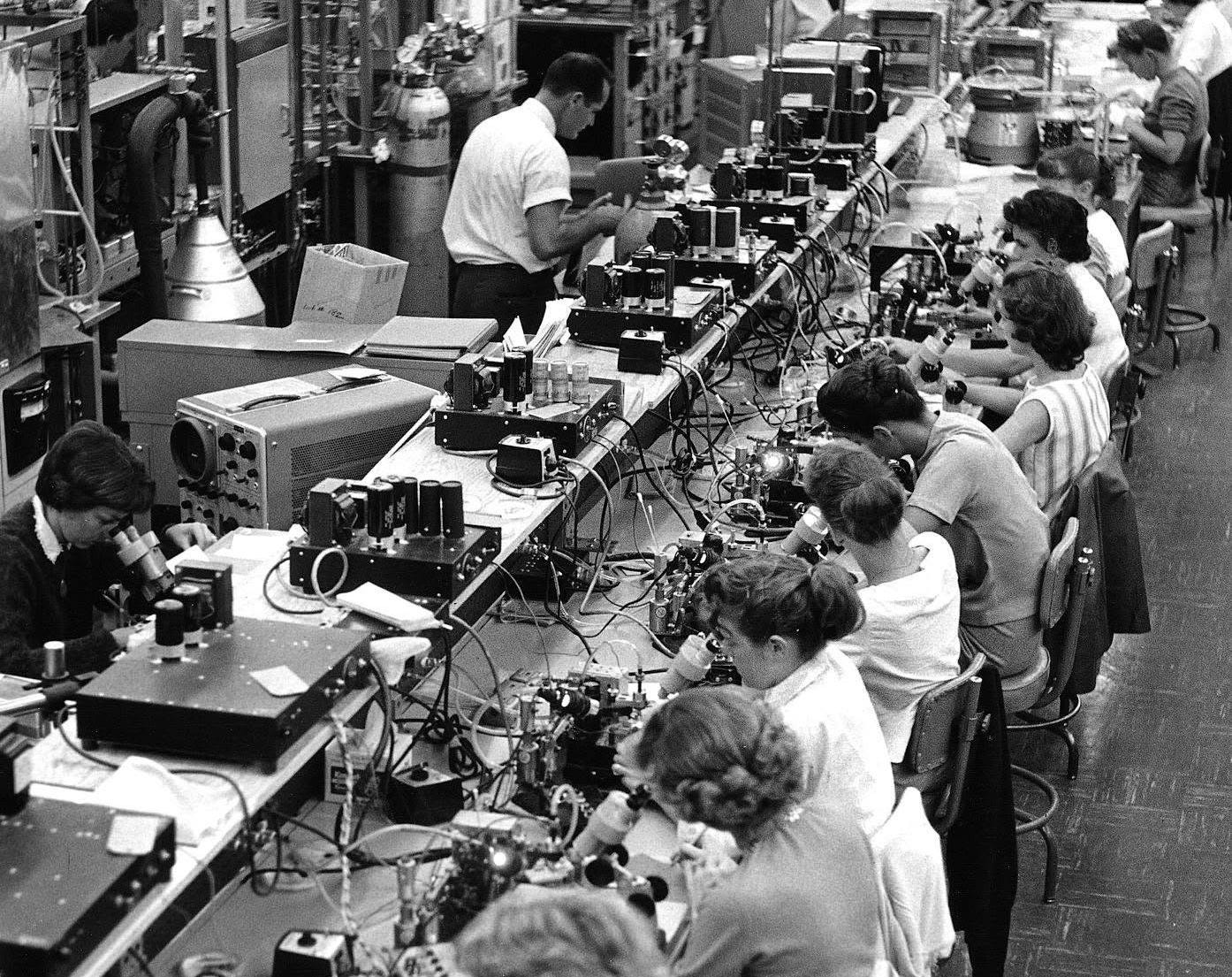
The demand to innovate rests on global markets: the United States’ large appetite for public spending and a global economy of consumers, institutions, and governments. Geopolitics influence the source. During the Cold War, defense budgets derisked big bets for developing weapons and rockets that drove new inventions. It wasn’t until the 1980s that market restrictions fell and civilian demand outstripped government demand to fund frontier competition in semiconductors with Japan. Since the 1990s, aggressive globalization has obstructed rising national security concerns from entirely fragmenting technology flows. Today’s restrictive trade policies on China still accept interdependence: the Bay Area relies on China for talent, investment, manufacturing, and a large customer base.
Fragmentation: How the Technology Flows
Innovating through different geopolitical periods, a concept naturally emerges of “fragmentation”: a way to evaluate the ease with which Bay Area technology flows throughout markets worldwide amidst governments competing.
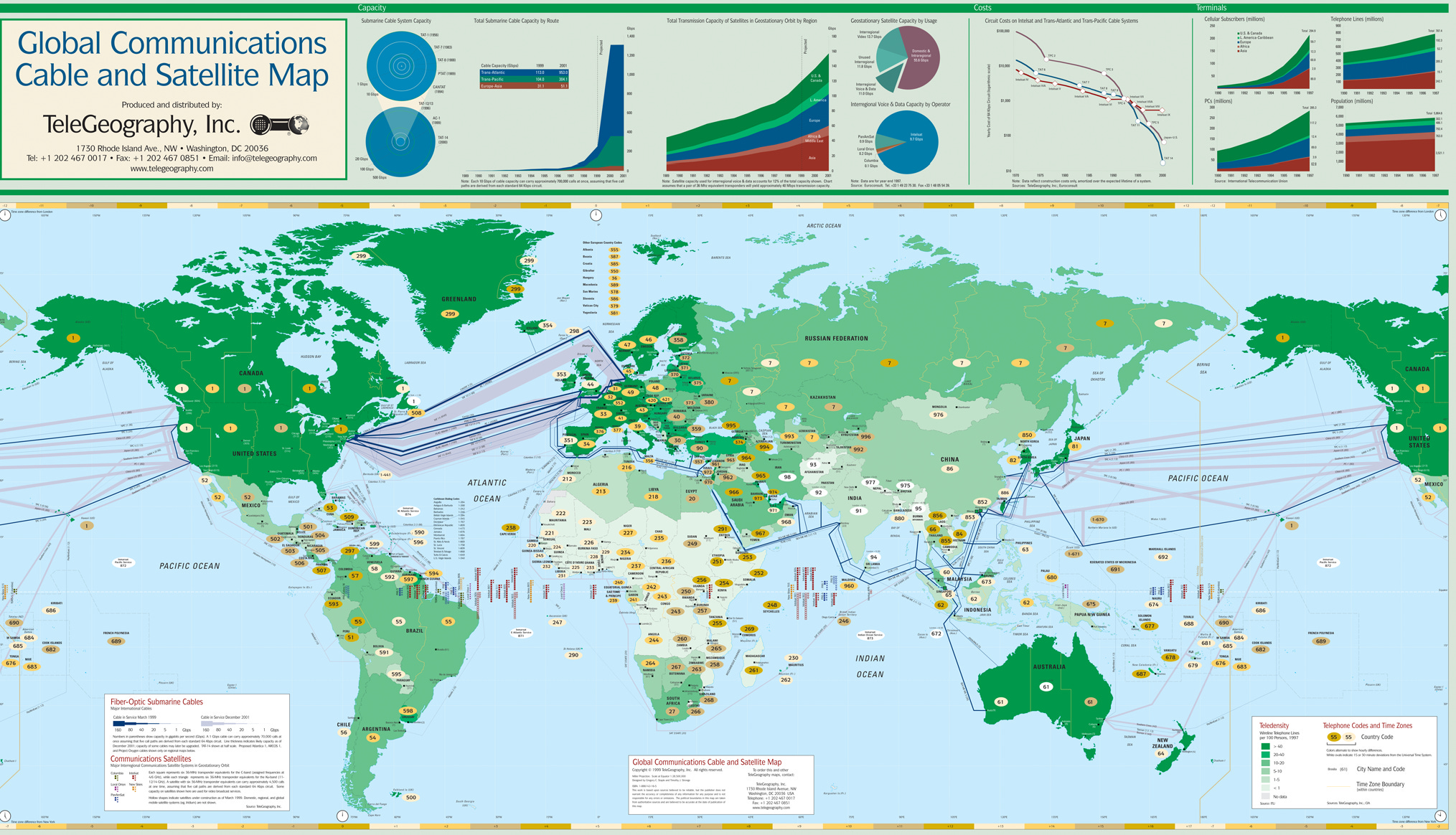
At times of cooler tensions, Bay Area technology companies find it easier to trade with various economies. During the 1990s, major networking providers faced less resistance in accessing foreign markets and introduced the networking equipment for the eventual Internet.
But when geopolitical tempers rise, governments restrict trade in many sectors, the world economy risks fragmenting into blocs, and the flow of high-technology follows. The Cold War dried up trade. Today risks the same. China’s rise and sectoral competition in high-technology industries like artificial intelligence, semiconductors, and electric vehicles are all provoking protectionist policies in Washington for the sake of protecting the national interest.
The Report to Follow
This report splits into two volumes.
The Bay Area consistently innovates new waves of technology, builds successful companies off it, and diffuses these advances into daily life and overseas markets—all through various levels of geopolitical competition.
Volume One splits into four chapters of history to trace how the Bay Area’s technology cluster navigates geopolitics from the end of World War II to 2020.
First, the Cold War throughout the 1950s drove innovation in the Bay Area to fuel a lead in strategic capabilities for the defense and space sectors.
Second, as the Cold War subsided over the 1970s and postwar economies recovered with various protectionist models, Japan arose as a chief competitor with the Bay Area over semiconductors; the United States saw its Bay Area companies lose the crown by falling behind in the frontier “Dynamic Random Access Memory” (DRAM) market.
Third, by the late 1980s, the Bay Area found support in Washington to protect its semiconductor firms, re-emerging as the leader in high technology through personal computing, microprocessors, and networking. With the fall of the Berlin Wall in 1989 and the Soviet Union in 1991, the world economy entered a period of unbridled globalization. Bay Area firms faced little direct global competition; they fostered overseas sources of talent and supply chains abroad like never before.
Fourth, over the 2000s and 2010s, the optimism of globalization soured as China’s rise into the upper echelon of the world economy brought new sectoral competition through a wave of digital revolutions: maturing internet, social media, and cloud computing. China pursued the same techno-nationalist playbook as Japan in many ways, but it managed to engage in global capitalism without relinquishing domestic control over its economy or adopting democracy. The result dashed the hopes of Washington’s liberal world order and the Bay Area’s digital utopia.
Volume Two splits into two halves to evaluate the current decade. First, the narrative extends the story to today: Since 2020, leaders have been sounding alarms about geopolitics risking the fragmentation of technology flows. Bay Area technology finds itself entangled in unique conflicts: China, Iran, Ukraine, and Europe. The rest of the report tests the narrative with an economic analysis that aggregates metrics of 47 relevant Bay Area technology companies.
Thursday’s chapter will introduce the Bay Area’s Engine of Innovation (Talent, Investment, and Commercialization). This framework will explain the cluster’s staying power to innovate through so many different geopolitical moments.
Thank you for being here,
Max
Ben Gilbert and David Rosenthal, "Meta," Acquired, October 28, 2024, https://www.acquired.fm/episodes/meta.
Meta Platforms, Inc., "Meta Reports Second Quarter 2026 Results," press release, July 29, 2026, https://investor.atmeta.com/investor-news/press-release-details/2026/Meta-Reports-Second-Quarter-2026-Results/default.aspx.
Ryan Christoffel, "Apple Reveals It Has 2.5 Billion Active Devices Around the World," 9to5Mac, January 29, 2026, https://9to5mac.com/2026/01/29/apple-reveals-it-has-2-5-billion-active-devices-around-the-world/.
Henry Farrell and Abraham Newman, Underground Empire: How America Weaponized the World Economy (New York: Henry Holt and Co., 2023), ch. 1.
Sarah Wynn-Williams, Careless People: A Cautionary Tale of Power, Greed, and Lost Idealism (New York: Flatiron Books, 2025).
Amnesty International, "Myanmar: Facebook's Systems Promoted Violence Against Rohingya; Meta Owes Reparations – New Report," September 2022, https://www.amnesty.org/en/latest/news/2022/09/myanmar-facebooks-systems-promoted-violence-against-rohingya-meta-owes-reparations-new-report/.
"Want to Prevent a Civil War? Regulate Social Media Algorithms, Says an Expert on Political Violence," Business Insider, January 2023, https://www.businessinsider.com/regulate-social-media-to-prevent-civil-war-barbara-f-walter-2023-1.
Iryna Volnytska, "Learning from Ukraine's Unrivaled Experience of Russian Cyber Warfare," UkraineAlert, Atlantic Council, September 13, 2026, https://www.atlanticcouncil.org/blogs/ukrainealert/learning-from-ukraines-unrivaled-experience-of-russian-cyber-warfare/.
Chris Miller, Chip War: The Fight for the World's Most Critical Technology (New York: Simon & Schuster, 2022).
Stephen Witt, The Thinking Machine: Jensen Huang, Nvidia, and the World's Most Coveted Microchip (New York: Viking, 2025).
Bay Area Council Economic Institute, "Hong Kong: Finding Opportunity in Asia's Changing Supply Chain Landscape," December 2025, https://www.bayareaeconomy.org/report/finding-opportunity-in-asias-changing-supply-chain-landscape/.
Bay Area Council Economic Institute, "Growth and Transformation: Economic Ties Between the San Francisco Bay Area and Ireland," https://www.bayareaeconomy.org/report/growth-and-transformation-ireland-bay-area-connection/.
Bay Area Council Economic Institute, "The Bay Area-Silicon Valley and India: Convergence and Alignment in the Innovation Age," https://www.bayareaeconomy.org/report/the-bay-area-silicon-valley-and-india/.