


Welcome to where it gets good. I’m hyped to bring you the start of Volume II of “Bay Area Abroad: Innovation through Fragmentation.” We are past history and start asking questions about today: where do tech companies find themselves entangled in some of the most violent and consequential events around the world? And the next chapter will be a lot of numbers that measure the commercial impact of rising geopolitical risk.
Every device and app takes a dual-use today. They all help us with everyday life, but the tools, infrastructure, and companies also defend world peace in Washington’s vision. I think about “upholding peace” as the act of preventing war. So what role do I—as user and voter—play? For centuries, governments work with private institutions to secure life for their people. From bowyers and blacksmiths to oil companies today, governments must control technologies with violent ends…1 in practice, doing so requires cooperating with—not commanding—actors motivated to grow, profit, and change the status quo.
Table of Contents: Introduction | How the Bay Area Makes New Tech | The Cold War | Japan | Globalization of the 1990s | China into Today | Today’s Fragmenting Flashpoints | Assessing The Engine & The Exposure | Conclusion
Thank you all for the continued support and feedback ahead of formal publication for the Bay Area Council Economic Institute. Let me know what you’d like to learn more about. Idea-market fit baby!
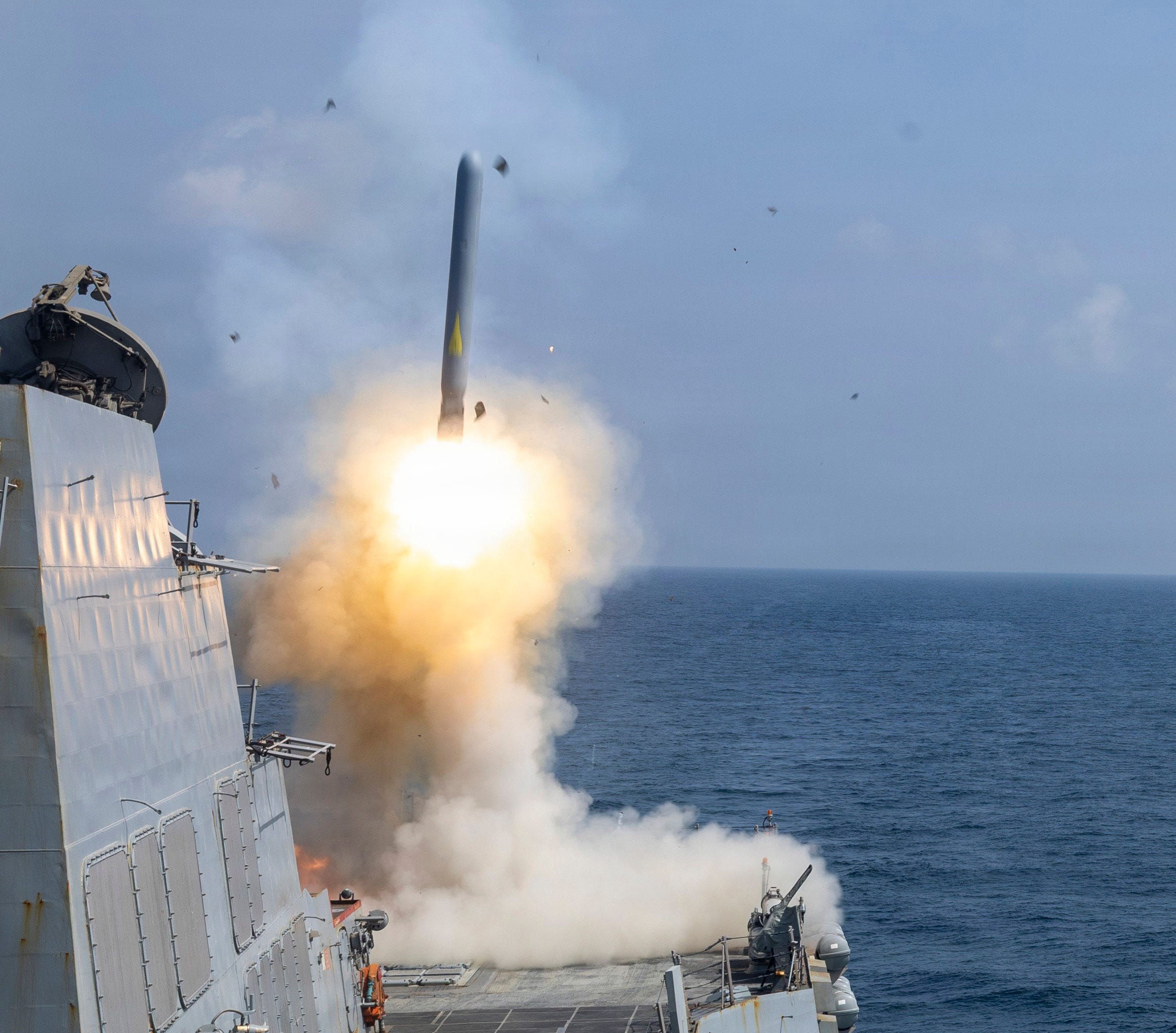
Flashpoints can fragment technology flows. When states inevitably clash, Bay Area companies are thrust into the middle of conflicts thanks to controlling the infrastructure, platforms, and products across borders and sectors. This chapter discusses four flashpoints entangling Bay Area technology companies today:
On China, policymakers measure the might of future US military capabilities with Bay Area chips and AI—trade restrictions seek to keep China behind the frontier.
In the Middle East and Ukraine, they’re the tools of offensive strikes and cloud networking resiliency—but now companies and employees are a target of Iranian and Russian forces.
In Europe, policymakers are pushing policies of “technological sovereignty” that use regulation to grow champions and combat the continent’s lag on the frontier.
Flashpoints Could Spiral World Trade
Flashpoints like wars and economic competition lead world leaders into worrying about independent survival. When protecting industries, raising import barriers can self-fulfill fears into eroding peace. Governments that pursue these policies of “autarky”—self-sufficiency, often at the cost of integration—isolate themselves, do not grow together, can end up directly competing, and even increase the chances of war. Look to the 1930s; after the world backslid into depression, tariff barriers rose, protectionism and reindustrialization rose—all making it easier for Europe to rearm itself leading up to World War II.
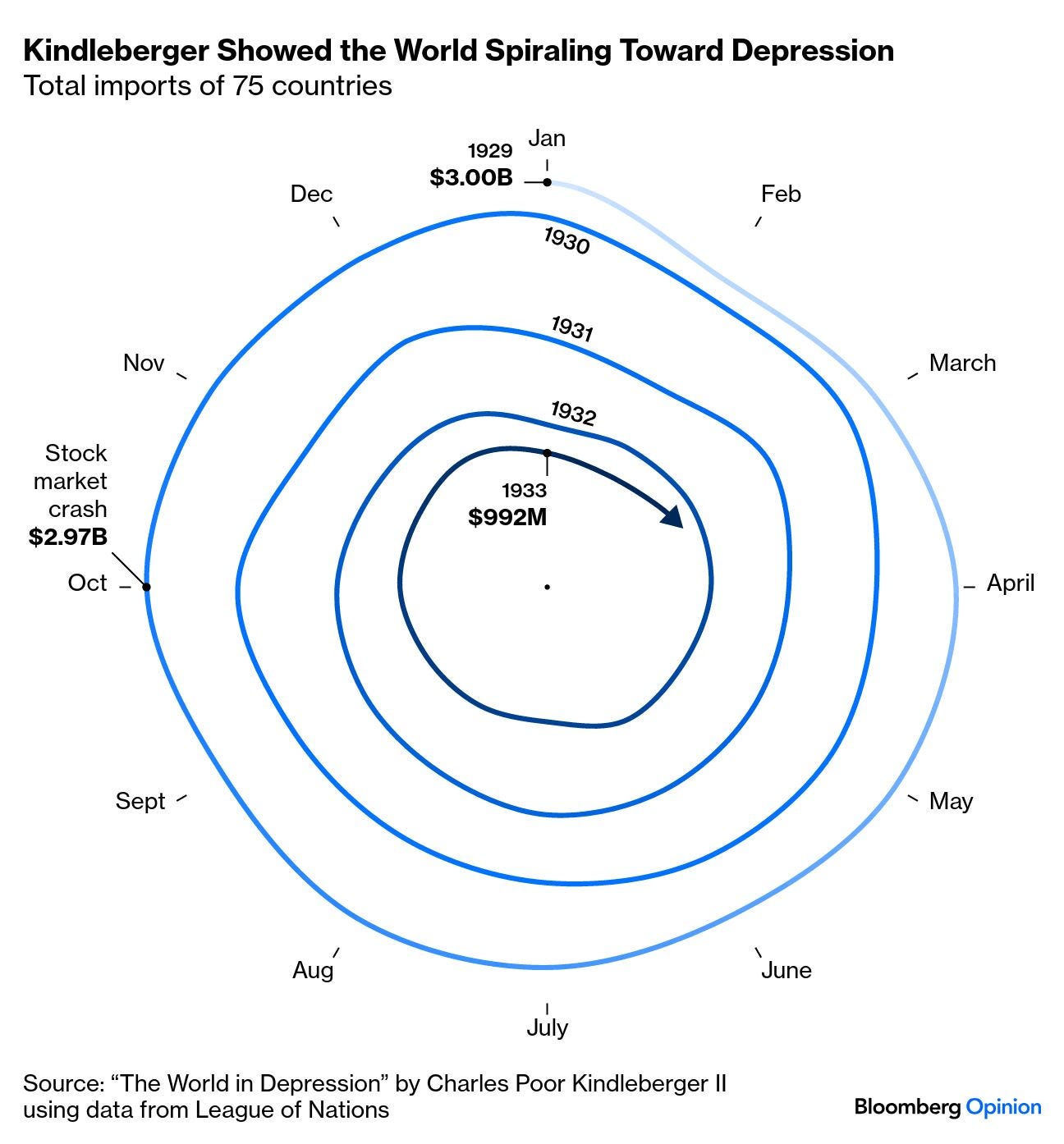
Today, leaders allude to flashpoints fragmenting world trade into a similar spiral. IMF Managing Director Kristalina Georgieva warned in January 2023, “we are facing the specter of a new Cold War that could see the world fragment into rival economic blocs.”2

But allowing economic competition prevents harsher military conflict. In an interview this summer at Stanford University, Edward Fishman, a former U.S. sanctions official and author of Chokepoints, reflected on the current moment of economic competition as a necessary pressure valve to avoid worse hot conflict.
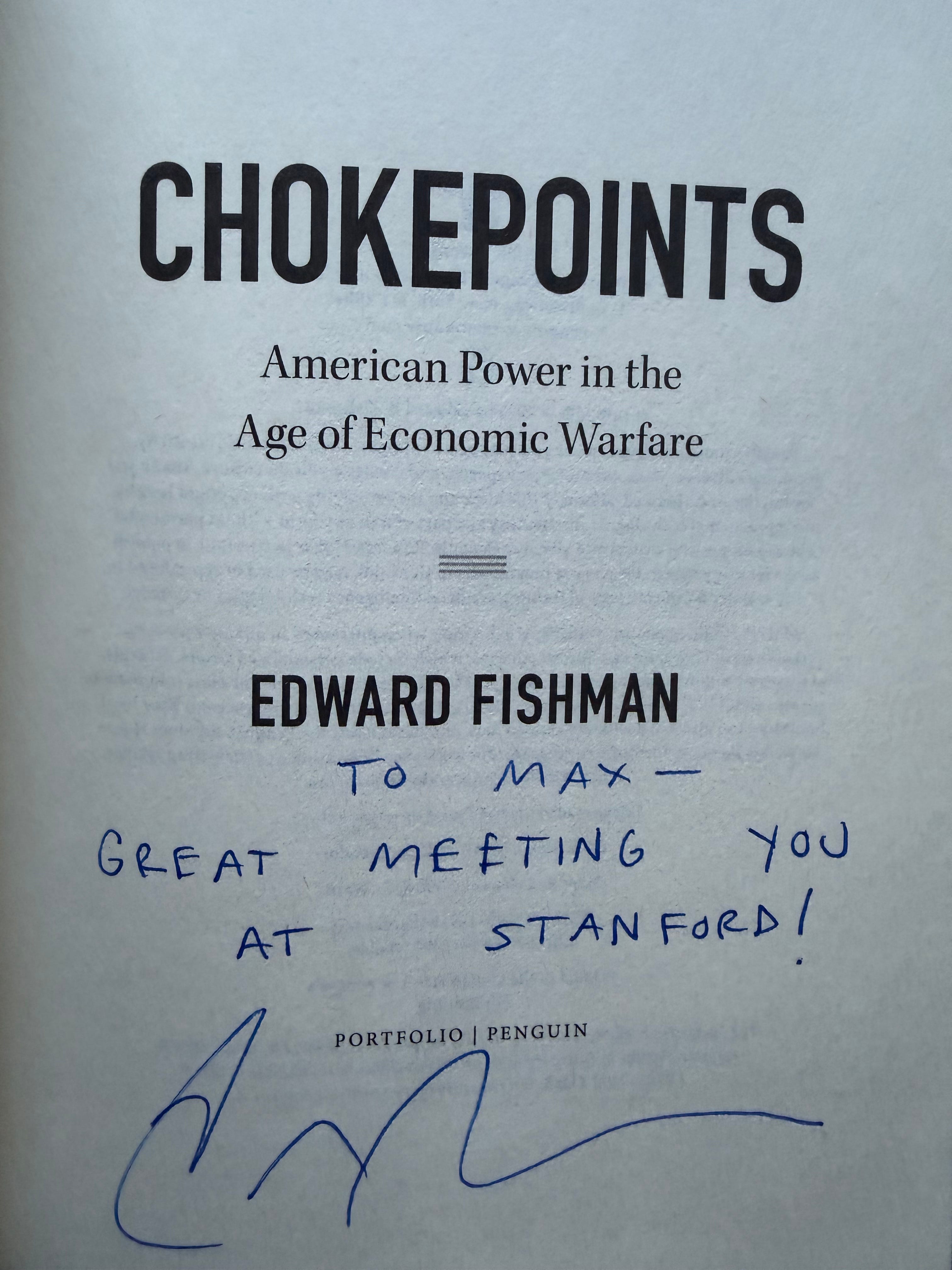
Fishman’s time in the Treasury Department led him to navigate various cases of conflict with private companies, including Iran and the JCPOA, Putin’s modern imperialism, and China’s desire to lead the technological frontier. From these experiences, he concludes in Chokepoints, “during the Cold War, geopolitical competition reigned supreme. Each bloc enjoyed a degree of economic security because it renounced interdependence with the enemy.” Today, the picture looks a lot different, “without the ability to channel geopolitical conflict into the economic arena, great powers could once again find themselves fighting on the actual battlefield.”3
Flashpoints Entangle Technology Companies
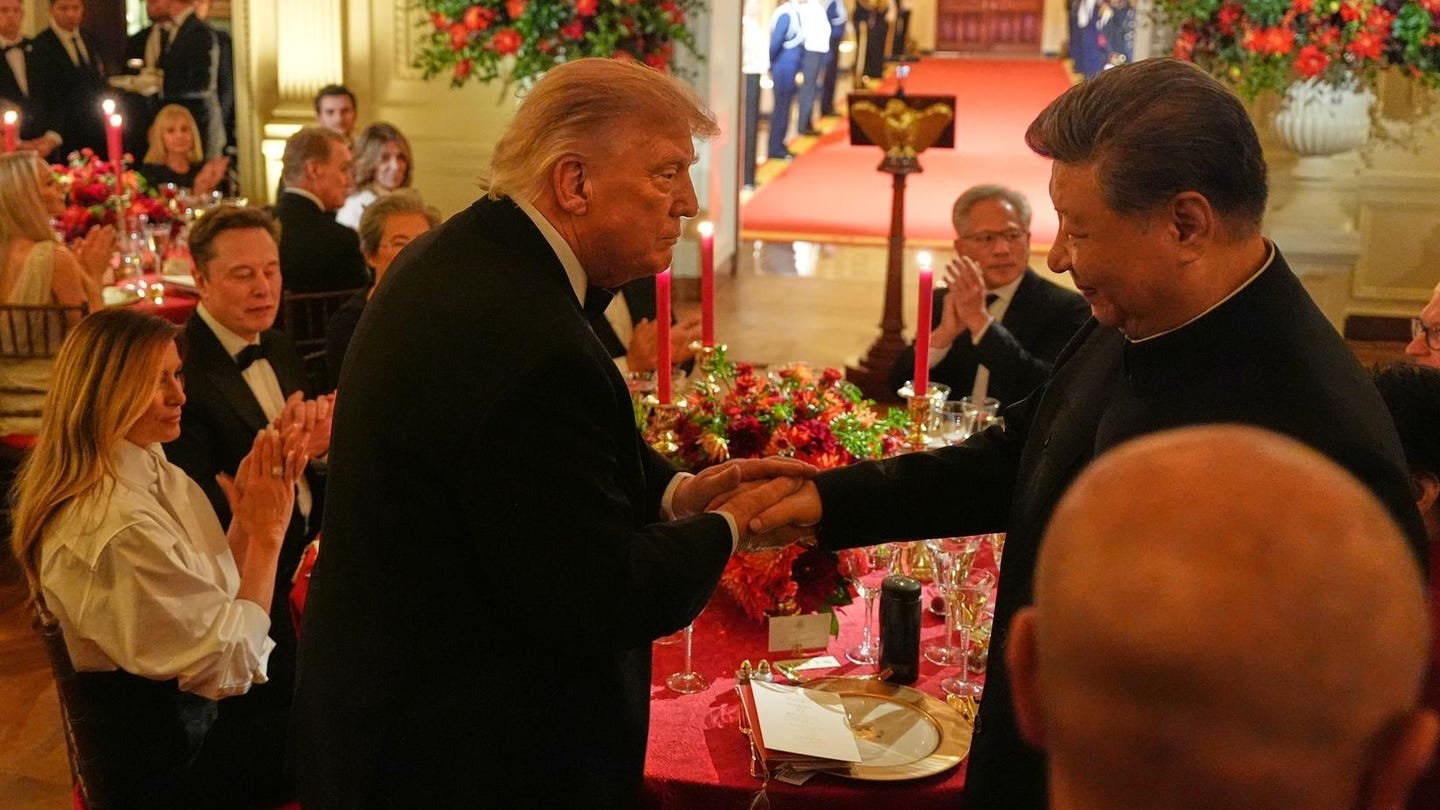
Embedded into life worldwide, technology companies cannot avoid playing geopolitics. Executives need to grasp foreign policy just as the statesmen they sit across from need to understand markets.
Cooperating and Competing in China
China’s rise created a tightrope for Bay Area technology companies to walk. The Bay Area cluster cooperates and competes with various sectors overseas. China boasts several clusters that Bay Area technology companies outsource parts of their lower-profit manufacturing to. But rising up the value-chain has also stoked flames of direct competition.
Washington views China’s civilian market—which produces consumer goods like the iPhone—and its military markets—that create advanced weapons systems—as inseparable thanks to the Chinese Communist Party’s Military-Civil Fusion Policy.4 This doctrine gives Beijing sweeping authority to direct its domestic industries toward advancing the People’s Liberation Army’s capabilities.
China’s largest competitive strength arises from leveraging commoditized layers at scale into creating champions in high-technology sectors. For example, China’s EV industry is the best in the world and grew out of its battery and electrification efforts. Today it produces the bulk of the world’s EVs, including more than half of all Teslas, built in Shanghai.56 Founded in San Carlos, the company retains a heavy operational presence in the Bay Area despite moving its headquarters to Austin.7 China’s own homegrown champions command the world’s market outside the US.8 In the first eight months of 2025, the top five Chinese automakers made up 43% of all global electric vehicle deliveries.9
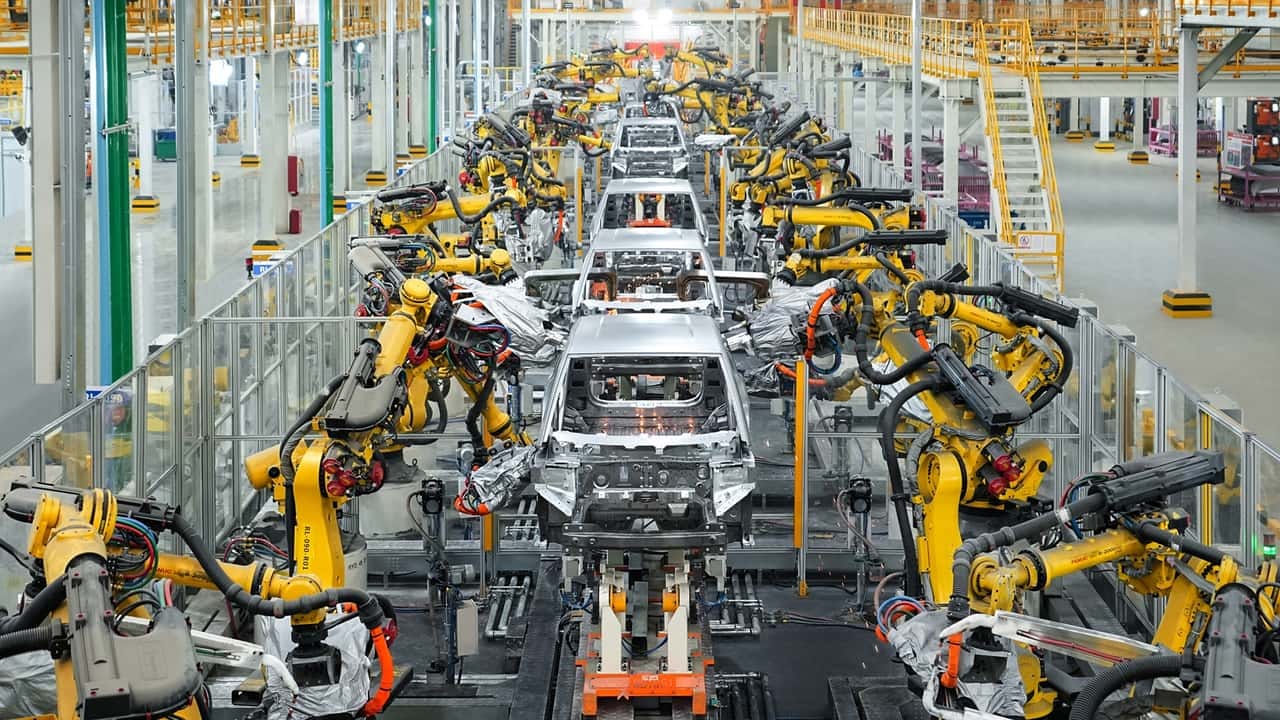
EV competitiveness rests on driving the cost of batteries down. Chinese firms produce about 80% of the world’s batteries; the Carnegie Endowment projects that by 2030 China “alone could produce the entire global demand for batteries… and has begun to weaponize its strength across battery supply chains.”10
As tensions rise, headlines suggest device companies are diversifying their factories into neighboring hubs like India. Supply chain watchers point to Apple’s recent factory buildout in Chennai as “physical proof” that India is on its way to becoming a credible manufacturing rival to China for the iPhone.11

Most pressing of all today lies the AI competition in the chip and model layers. According to historian Chris Miller in Chip War, “the rivalry between the United States and China may well be determined by computing power.”12
The competition for leading chip design disrupts Bay Area chipmakers and the hardware companies too. As compliance checks work to prevent products from reaching sanctioned buyers, governments have moved to curb illegal transshipment of critical technologies. In July 2026, NVIDIA excluded more than half of its previously authorized Asian customers from purchasing AI chips after creating a new “whitelist” system.13 Concerns of chip smuggling continue to rise.
Striking Iran
Bay Area technology continues to be used by US defense operations today. In February 2026, Bay Area technology companies helped strike Iranian targets at the outset of the war. Advances in AI-enabled data ingestion reportedly played a role in American strikes on Iran, with one account crediting Anthropic’s Claude model with supporting the identification of over 1,000 targets within 24 hours for “intelligence assessments, target identification and simulating battle scenarios.”1415
Project Maven is a defense innovation that compresses operational planning. It relies on frontier AI models to process billions of collected data points—human reporting, digital communications, satellite imagery, and open-source streams—to speed up kinetic decisions.
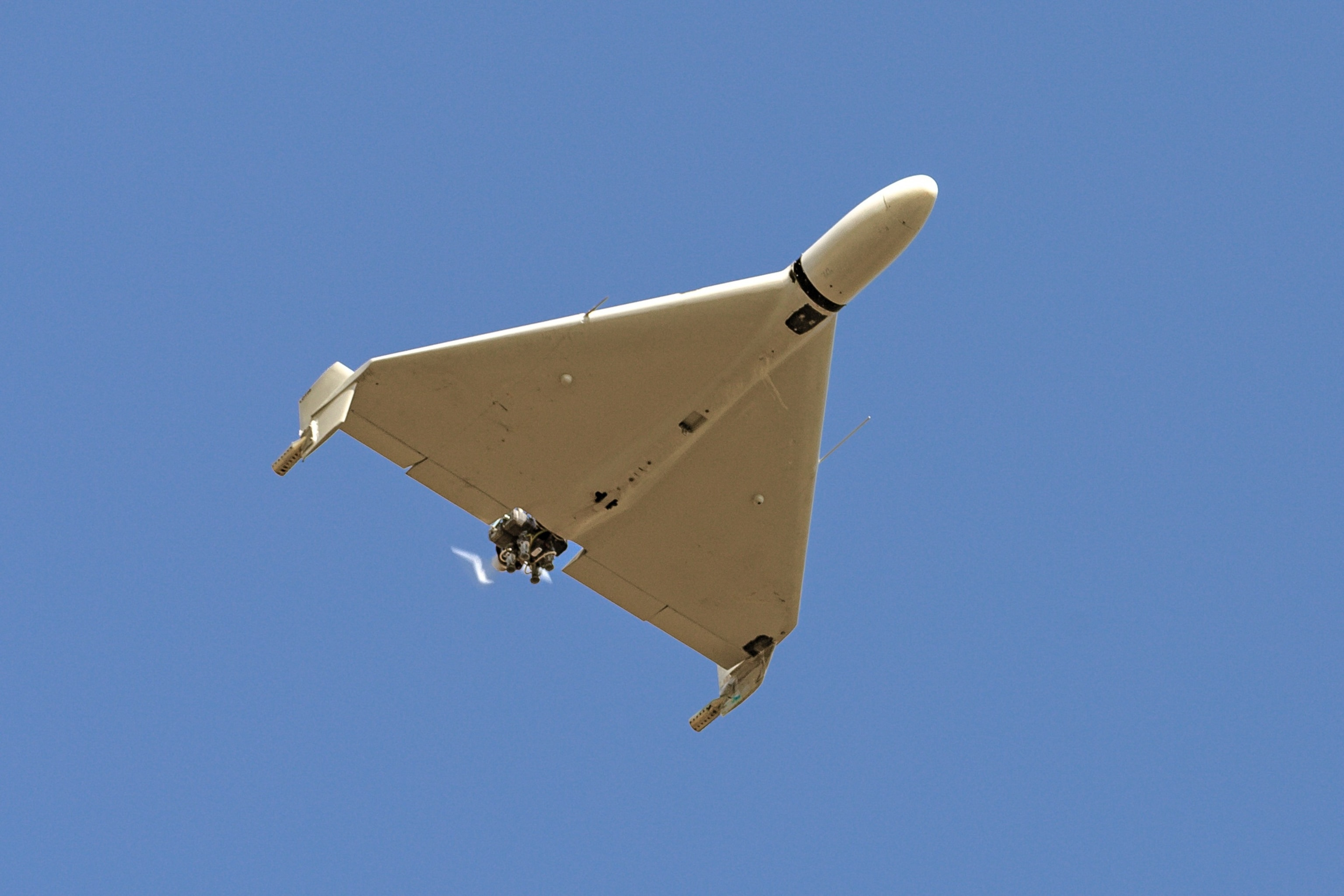
In March 2026, Iran’s Islamic Revolutionary Guard Corps responded and threatened 18 companies operating in the Middle East, including American tech and defense companies Apple, Boeing, Cisco, Dell, Google, HP, IBM, Intel, Meta, Microsoft, Nvidia, Oracle, Palantir, and Tesla.16 Hyperscaler data centers have become combat targets. Since March 2026, Iranian Shahed drones have reportedly struck or damaged data centers owned by Amazon and Oracle in the UAE and Bahrain.17
Underpinning Ukraine
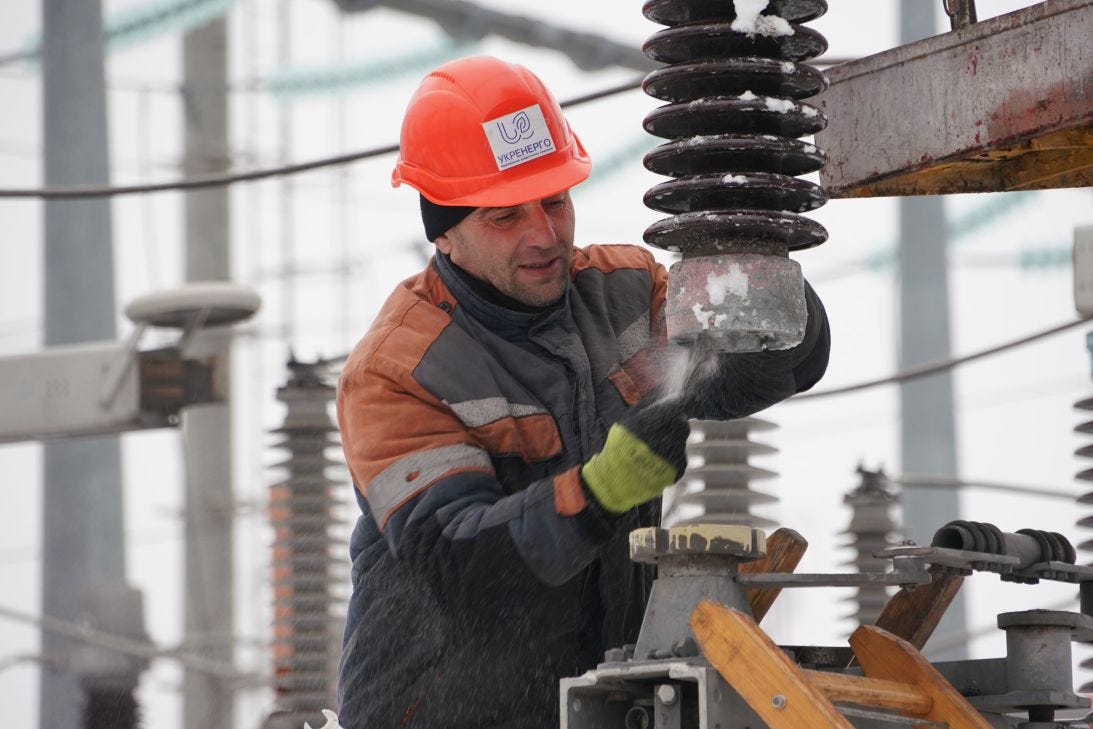
In Ukraine, several Bay Area technology companies support the resistance today because they were drawn into the conflict due to their presence prior to invasion. More than 305,000 IT specialists and 2,200 active companies operate in Ukraine— many of which partner with Bay Area technology companies across the IT stack.18
For example, Alphabet had built its first research and development center in Kyiv in January 2020.19 Since the war’s outbreak, Russia escalated its dispute with Alphabet, throttling services like YouTube and imposing a fine on the company—one that, through weekly compounding, has grown to a figure notionally exceeding world GDP—for blocking pro-Kremlin and state-aligned media.20
And Cisco reportedly collaborated with the US government to modify a hardened wired network switch that helped Ukrainian infrastructure maintain accurate time synchronization despite Russian GPS-jamming.21
Navigating European Regulation
Several European initiatives are seeking to regain technological sovereignty as the great powers of the United States and China compete ahead of them on the frontier. Supporting emerging technology leadership is a constant talking point at Davos, G20, G7, and industry summits.22 The underlying reality is troubling: Europe’s share of global AI infrastructure is projected to barely exceed 5% by 2031.23 Founders are frustrated with the regulatory environment and pursue clusters more friendly to innovation, including the Bay Area.
In response, this August, the newly established Rhine Group, a consortium of European leaders from “government, academia, and business,” convened to “discuss possible answers to these challenges for the future of Europe.” This group’s own assessment is blunt: of the fifty largest technology companies in the world, only four are European, and “in every emerging technology that will shape the coming decades, Europe is weak.”24
Future Fragmentation in Chips, Telecom, and AI
Several future technologies could fragment along rival economic blocs: the entire chip layer, telecom infrastructure, and artificial intelligence are but a few. Today, export controls on semiconductors produced on Western supply chains continue to keep China behind the frontier, but does this spur indigenization? Time suggests so.25
And as the next mobile internet standard, 6G, emerges, doubts exist over whether Western and Chinese vendors—increasingly competing for high-tech market share—can converge on a single joint standard.26 In such a future, an iPhone sold in the United States might be unable to connect to network infrastructure built by Huawei. The mobile internet may very well split into two and premium dual-connectivity devices could arise.
Finally, the AI race between open-source Chinese and closed-source American models has raised new policy questions over whether AI models can be chokepoints to control like prior frontier technologies. Attempts to restrict models—preventing American businesses from running on Chinese models—are fickle.27 AI usage is fragmenting into a dual market split between the premium leading labs of the United States and the “Hundred Model War” of open-source rivalry in China.28 In July, a CNBC report found that the share of enterprise tokens used on Chinese models through OpenRouter, which lets developers access different models, has sat above 30% since February and risen to as high as 46%.29 Those chokepoints cannot exist in a commoditizing market that China is driving; the easy access to open models—good enough with plenty of alternatives— denies Washington a new tool for coercion.
A Coming Tech Cold War?
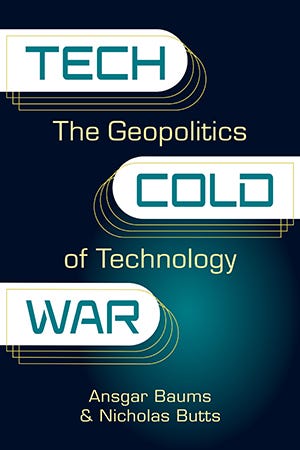
Geopolitics disrupting global trade affects where and how high-technology flows. Cybersecurity experts and executives Ansgar Baums and Nicholas Butts consider a future where the global IT stack separates into Western and Chinese stacks over the next decade. This would heighten the risk of brinkmanship, lock entire industries from collaborating, and could even divide the global internet into two. Baums and Butts lay out this coming struggle in detail but spend comparatively little time surveying the current economic state of the companies caught in the middle—a gap the quantitative analysis in this report aims to fill.30
The next chapter questions measures the impact of this fragmentation on the commercial activity of Bay Area technology companies.
See you tomorrow,
Max
Max Weber, “Politics as a Vocation” (1919), in From Max Weber: Essays in Sociology, ed. H. H. Gerth and C. Wright Mills (Oxford University Press, 1946), 78: “a state is a human community that (successfully) claims the monopoly of the legitimate use of physical force within a given territory.”
Kristalina Georgieva, “Confronting Fragmentation Where It Matters Most: Trade, Debt, and Climate Action,” IMF Blog, January 16, 2023, https://www.imf.org/en/Blogs/Articles/2023/01/16/Confronting-fragmentation-where-it-matters-most-trade-debt-and-climate-action: “Indeed, even as we need more international cooperation on multiple fronts, we are facing the specter of a new Cold War that could see the world fragment into rival economic blocs. This would be a collective policy mistake that would leave everyone poorer and less secure.”
Edward Fishman, Chokepoints: American Power in the Age of Economic Warfare (Portfolio, 2025), 424–425.
U.S. Department of State, “The Chinese Communist Party’s Military-Civil Fusion Policy,” 2017–2021 archive, https://2017-2021.state.gov/military-civil-fusion/; see also State’s one-pager, “What Is MCF?,” https://www.state.gov/wp-content/uploads/2020/05/What-is-MCF-One-Pager.pdf, which describes MCF as “designed to eliminate the barriers between China’s civilian research and commercial sectors and its military and defense industrial sectors.”
Brad W. Setser, “Will China Take Over the Global Auto Industry?,” Council on Foreign Relations, December 8, 2024, https://www.cfr.org/articles/will-china-take-over-global-auto-industry: China “now produces the bulk of the world EVs (and almost half of all Teslas).” On San Carlos: Tesla Motors, press release, August 16, 2008, https://ir.tesla.com/press-release/tesla-motors-produce-all-electric-luxury-sedan-california: “20 miles from the current headquarters in San Carlos.”
“Grace Tao: Shanghai Gigafactory Accounts for More Than Half of Tesla’s Global Deliveries in 2025,” Gasgoo, February 5, 2026, https://autonews.gasgoo.com/articles/news/grace-tao-shanghai-gigafactory-accounts-for-more-than-half-of-teslas-global-deliveries-in-2025-2019434852447653888: “The Shanghai Gigafactory delivered 851,000 EVs during the year, accounting for more than half of the global total and remaining the company’s largest export center worldwide.”
More on this definition will be discussed in the forthcoming chapter.
Setser, “Will China Take Over the Global Auto Industry?”: “China now has an incredible—and I would argue unprecedented—capacity to supply over half the global market for cars”; “China is now the world leader in EVs and batteries.”
SNE Research, “From Jan to Aug in 2025, Global Electric Vehicle Deliveries Recorded Approximately 12.837Mil Units,” October 14, 2025, https://www.sneresearch.com/en/insight/release_view/512/page/144. Share is the sum of BYD, Geely, SAIC, Changan and Chery in SNE’s chart; BEV and PHEV.
Milo McBride, “Inside the Global Race to Erode a Battery Manufacturing Monopoly,” Carnegie Endowment for International Peace, August 18, 2026, https://carnegieendowment.org/emissary/2026/08/china-battery-dominance-geopolitics: “Chinese firms produce about 80 percent of the world’s batteries…”; “By 2030, China alone could produce the entire global demand for batteries.”; “In recent years, the Chinese government has begun to weaponize its strength across battery supply chains, largely in response to U.S. export restrictions on semiconductor technology.”
Sankalp Phartiyal, “How Apple and India Built an Alternative iPhone Production Hub,” Bloomberg, August 5, 2026, https://www.bloomberg.com/news/features/2026-08-05/apple-builds-iphone-production-capacity-in-india-to-hedge-its-china-risk: “India’s major iPhone factory in Chennai is physical proof that the country is on its way to proving its doubters wrong.”
Chris Miller, Chip War: The Fight for the World’s Most Critical Technology (Scribner, 2022), xix: “The rivalry between the United States and China may well be determined by computing power.”
Reuters, “Nvidia Halves Asia Buyer List in China Chip Crackdown, FT Reports,” July 13, 2026, https://finance.yahoo.com/technology/ai/articles/nvidia-halves-asia-buyer-list-033140201.html, reporting the Financial Times, https://www.ft.com/content/7c146c56-cc7a-40ec-93cb-58106a012421: Nvidia “more than halved the number of Asian customers authorised to buy its AI chips” after “introducing a ‘white list’ of companies that passed tougher compliance checks to prevent the products from reaching China.”
Tara Copp, “Anthropic’s AI Tool Claude Central to U.S. Campaign in Iran, amid a Bitter Feud,” Washington Post, March 4, 2026, https://www.washingtonpost.com/technology/2026/03/04/anthropic-ai-iran-campaign/.
“U.S. Strikes in Middle East Use Anthropic, Hours After Trump Ban,” Wall Street Journal, live coverage, February 28, 2026, https://www.wsj.com/livecoverage/iran-strikes-2026/card/u-s-strikes-in-middle-east-use-anthropic-hours-after-trump-ban-ozNO0iClZpfpL7K7ElJ2; as quoted in Parmy Olson, “Claude AI Helped Bomb Iran. But How Exactly?,” Bloomberg Opinion, March 4, 2026: “US Central Command used Anthropic’s Claude AI for ‘intelligence assessments, target identification and simulating battle scenarios’ during the strikes on the country, according to a report in the Wall Street Journal.”
“Iran Threatens to Target US-Owned Infrastructure in the Middle East,” Politico, March 31, 2026, https://www.politico.com/news/2026/03/31/iran-threatens-to-target-us-owned-infrastructure-in-the-middle-east-00852120: “The Islamic Revolutionary Guard Corps threatened Tuesday to target American tech and defense companies operating in the Middle East if the U.S. and Israel continue to target Iranian leadership.” “The IRGC listed 18 companies it threatened to target … The companies include Cisco, HP, Intel, Oracle, Microsoft, Apple, Google, Meta, IBM, Dell, Palantir, Nvidia, Tesla and Boeing, among others.”
Joseph Jarnecki and Noah Sylvia, “Iranian Data Strikes Shake Global Digital Infrastructure,” RUSI, March 19, 2026, https://www.rusi.org/explore-our-research/publications/commentary/iranian-data-strikes-shake-global-digital-infrastructure: “Before sunrise on Sunday 1 March, Iranian Shahed drones directly struck two Amazon Web Services data centres in the United Arab Emirates. That same morning, debris from a nearby strike damaged a third AWS data centre in Bahrain.” On Oracle: Georgia Butler, “Iran Attack Hits an Oracle Data Center in Dubai, Causes Limited Damage,” DatacenterDynamics, April 7, 2026, https://www.datacenterdynamics.com/en/news/iran-attack-hits-an-oracle-data-center-in-dubai-causes-limited-damage/.
“Ukraine’s IT Market Reaches $7.85 Bln, with 2,200 Active Companies – Ministry of Digital Transformation,” Interfax-Ukraine, April 7, 2026, https://en.interfax.com.ua/news/economic/1157472.html: “According to the study, Ukraine currently has more than 305,000 IT specialists and 2,200 active companies.” Study: IT Ukraine Association, Code Economy: How IT Shapes Ukraine’s Economy (2025), 27, 16, https://itukraine.org.ua/files/the-code-economy_en-2025.pdf: “approximately 305,178 people”; “2,243 active verified IT companies.”
Alexander Query, “Google Opens Research and Development Center in Ukraine,” Kyiv Post, January 15, 2020, https://www.kyivpost.com/post/7682: “Google has reportedly opened its second office in Ukraine. The U.S. tech giant launched its new research and development (R&D) center in Kyiv in January 2020.”
David Hodari, “Russia Fines Google More Than the World’s Entire GDP,” NBC News, October 31, 2024, https://www.nbcnews.com/news/world/russia-fines-google-20-decillion-world-gdp-youtube-kremlin-war-ukraine-rcna178172: “The size of the fine was to double each week for every week of non-compliance, with no limit on its size,” “far larger than the size of the entire global economy.”
Joe Marshall, “Project PowerUp – Helping to Keep the Lights on in Ukraine in the Face of Electronic Warfare,” Cisco Talos, December 4, 2023, https://blog.talosintelligence.com/project-powerup-ukraine-grid/: “Cisco Talos worked alongside several other teams at Cisco, along with government partners in the U.S and Ukraine, to find a technological solution.” “Ukraine’s high-voltage electricity substations rely on GPS for time synchronization.”
“RAISE Summit, the World’s Leading AI Event, Returns to Paris, July 8-9, 2026 at the Iconic Carrousel Du Louvre,” ACCESS Newswire, November 19, 2025, https://www.accessnewswire.com/newsroom/en/publishing-and-media/raise-summit-the-worlds-leading-ai-event-returns-to-paris-july-8-9-2026-at-the-1103837: “RAISE Summit, the world’s leading AI conference, today announced its 2026 edition, returning to the iconic Carrousel du Louvre, Paris, on 8-9 July 2026.”
Bertin Martens, “How Can Europe Build Sovereign AI Computing Capacity?,” Bruegel, September 14, 2026, https://www.bruegel.org/newsletter/how-can-europe-build-sovereign-ai-computing-capacity: Europe’s “share of global AI infrastructure will barely exceed 5% by 2031, compared to over 70% for the United States and 15% for China.”
Rhine Group, “A Stronger, More Competitive Europe,” https://www.rhinegroup.eu/: “Of the fifty largest technology companies in the world, only four are European. In every emerging technology that will shape the coming decades, Europe is weak.” “The Rhine Group convenes European leaders from government, academia, and business to discuss possible answers to these challenges for the future of Europe.”
Jacob Feldgoise and Hanna Dohmen, “Pushing the Limits: Huawei’s AI Chip Tests U.S. Export Controls,” Center for Security and Emerging Technology, June 17, 2024, https://cset.georgetown.edu/publication/pushing-the-limits-huaweis-ai-chip-tests-u-s-export-controls/: Huawei succeeded in “designing a chip that could be manufactured domestically at SMIC and supplied to the Chinese market,” and “The 910B demonstrates that Huawei is continuing to innovate under export controls but is falling behind.” See also International Institute for Strategic Studies, “Are US Export Controls on Tech Failing?,” August 25, 2026, https://www.iiss.org/online-analysis/online-analysis/2026/08/are-us-export-controls-on-tech-failing/: “Chinese firms have recently announced or released advances in chip design and manufacturing and AI, while US export-control policy has suffered from confusion and bureaucratic inertia.”
Jeroen Groenewegen-Lau, “Fragmenting Technology – 6G Mobile Could Divide the World,” MERICS, February 22, 2023, https://merics.org/en/comment/fragmenting-technology-6g-mobile-could-divide-world: “A more likely scenario will see two blocks forming – a Western one around US leadership and another one following China’s lead.” The piece adds: “But there is still a fair chance that a single 6G standard can be reached.”
Maria Curi, “The Secret Trump Administration Battle to Fight Chinese AI,” Axios, July 20, 2026, https://www.axios.com/2026/07/20/ai-us-china-open-source-kimi: “The White House considered implementing an executive order saying U.S. companies could only host Chinese models if they could guarantee security and take liability if it were breached.” National Institute of Standards and Technology, “CAISI Evaluation of DeepSeek AI Models Finds Shortcomings and Risks,” September 30, 2025, https://www.nist.gov/news-events/news/2025/09/caisi-evaluation-deepseek-ai-models-finds-shortcomings-and-risks, quoting Commerce Secretary Howard Lutnick: “It shows why relying on foreign AI is dangerous and shortsighted.” Maggie Eastland and Shirin Ghaffary, “China’s Open-Weight Models to Be Spared US Tests, US Firms Told,” Bloomberg, August 5, 2026, https://www.bloomberg.com/news/articles/2026-08-05/china-s-open-weight-models-to-be-spared-us-tests-us-firms-told.
Alex Colville, “Hundred Model War,” The CCP Dictionary, China Media Project, July 15, 2024, https://chinamediaproject.org/the_ccp_dictionary/hundred-model-war/.
“Chinese AI Models Now Capture Up to 46% of US Enterprise Token Usage,” Forkast News via Yahoo Finance, July 8, 2026, https://finance.yahoo.com/technology/ai/articles/chinese-ai-models-now-capture-020440715.html, reporting a CNBC investigation published July 7, 2026, https://www.cnbc.com/2026/07/07/chinese-ai-models-costs-us-openai-anthropic.html: “For every week since February 8, 2026, Chinese-origin AI models have accounted for at least 30% of the enterprise token volume on OpenRouter. By mid-2026, that share reached a weekly peak of 46%, according to a CNBC investigation published July 7.”
Ansgar Baums and Nicholas Butts, Tech Cold War: The Geopolitics of Technology (Lynne Rienner, 2025).